
The 11 A.M. Match: 23 Teams, 62 Games in Ahmedabad, and a Title the World's Second-Best Side Isn't In
**मुख्य उत्तर:** पहली कॉमनवेल्थ कबड्डी चैंपियनशिप 23 से 31 अक्टूबर 2026 तक अहमदाबाद के वीर सावरकर स्पोर्ट्स कॉम्प्लेक्स में होगी। 13 देशों की 23 टीमें 62 मुकाबले खेलेंगी। भारतीय पुरुष टीम का पहला मैच 23 अक्टूबर 2026 को इंग्लैंड से और महिला टीम का मलेशिया से है। **मुख्य तथ्य:** - टूर्नामेंट 23 से 31 अक्टूबर 2026 तक, कुल 62 मैच — 39 पुरुष वर्ग में, 23 महिला वर्ग में। - पुरुष वर्ग में 13 टीमें दो ग्रुप में; भारत ग्रुप ए में नाइजीरिया, मलेशिया, उगांडा, इंग्लैंड, तंजानिया, श्रीलंका के साथ। - महिला वर्ग में 10 टीमें दो ग्रुप में; भारत ग्रुप ए में सिंगापुर, नाइजीरिया, उगांडा, मलेशिया के साथ। - पुरुष कप्तान सुरजीत सिंह, उप-कप्तान नवीन कुमार; महिला कप्तान निधि शर्मा, उप-कप्तान रितु। - सेमीफ़ाइनल 30 अक्टूबर 2026 को, दोनों फ़ाइनल 31 अक्टूबर 2026 को; आयोजक अमेच्योर कबड्डी फेडरेशन ऑफ इंडिया। **स्रोत:** टूर्नामेंट पूर्वावलोकन विज्ञप्ति एवं रिपोर्ट, 22 अक्टूबर 2026 | Cross-checked: cricsultan.com **संबंधित प्रश्न-उत्तर:** प्रश्न: भारतीय पुरुष टीम के ग्रुप में कौन-कौन सी टीमें हैं? उत्तर: ग्रुप ए में भारत के साथ नाइजीरिया, मलेशिया, उगांडा, इंग्लैंड, तंजानिया और श्रीलंका हैं। प्रश्न: भारत का पहला मुकाबला कब और किससे है? उत्तर: 23 अक्टूबर 2026 को महिला टीम शाम 6:45 बजे मलेशिया से और पुरुष टीम रात 8:30 बजे इंग्लैंड से खेलेगी। प्रश्न: इस चैंपियनशिप का 2030 कॉमनवेल्थ गेम्स से क्या संबंध है? उत्तर: अहमदाबाद 2030 कॉमनवेल्थ गेम्स की मेज़बानी की तैयारी में है और यह टूर्नामेंट कबड्डी के कार्यक्रम में शामिल होने के दावे को 13 देशों की भागीदारी से मज़बूत करता है।
The first match of the inaugural Commonwealth Kabaddi Championship will be played at the Veer Savarkar Sports Complex in Ahmedabad at 11 a.m. on Friday, and it features Kenya against Singapore in men's Group B. No host team. No Indian player. If the broadcast plan behaves the way it usually behaves, this will be a scoreline and nothing else by the time the evening bulletin runs. I got there at ten. Thirty-four chairs had been set out in the press area; six were occupied; three of the six had Kenya badges in front of them.
Chairs tell you about atmosphere, not argument. For argument I needed a match count, and the count says this: in a nine-day tournament, any men's team in Group B gets five group games, because that group has six teams. Any women's team gets four group games, because the women's draw is two groups of five. The entire claim of this event — 23 teams, 13 nations, 62 matches — rests on those five and four, not on the trophy.
The scoreboard will show a champion on October 31. The ledger wants to record something before that: the real currency of this championship is competitive matches per federation. And the first jolt lands immediately — a 62-match tournament gives a debutant federation five.
According to the details released by the organisers on October 22, 2026, the championship runs from October 23 to 31, nine days in all. Twenty-three teams from 13 nations will play 62 matches — 39 in the men's competition and 23 in the women's. The Amateur Kabaddi Federation of India is organising it with approval from the International Kabaddi Federation, and it is being read alongside Ahmedabad's preparation to host the 2030 Commonwealth Games. That framing matters, because it changes what the tournament is for. It is not simply a title event; it is an argument presented in the shape of 23 teams.
The men's draw has 13 teams in two groups. India are in Group A with Nigeria, Malaysia, Uganda, England, Tanzania and Sri Lanka. Group B is Bangladesh, Kenya, Canada, Australia, Scotland and Singapore. Group A carries seven teams and therefore six group games per side; Group B carries six teams and five games. That seven-versus-six gap is much larger than it looks on a Friday morning, and I will come back to it.
India's men open against England at 8:30 p.m. on Friday, then face Uganda on October 24, Malaysia on October 25, Nigeria on October 26, Tanzania on October 27 and Sri Lanka on October 29. Four straight days, a day off, then the last group game. Nidhi Sharma's women open against Malaysia at 6:45 p.m. on Friday, then play Singapore on October 24, Uganda on October 25 and Nigeria on October 26 — four matches in four days, followed by a three-day gap before the semifinals.
The women's competition has 10 teams in two groups of five. India are in Group A with Singapore, Nigeria, Uganda and Malaysia; Group B is Bangladesh, Kenya, England, Scotland and Sri Lanka. Note that England sit in India's men's group but not in India's women's group — the men meet them on day one, the women can only meet them in a semifinal or final. One country, two different routes.
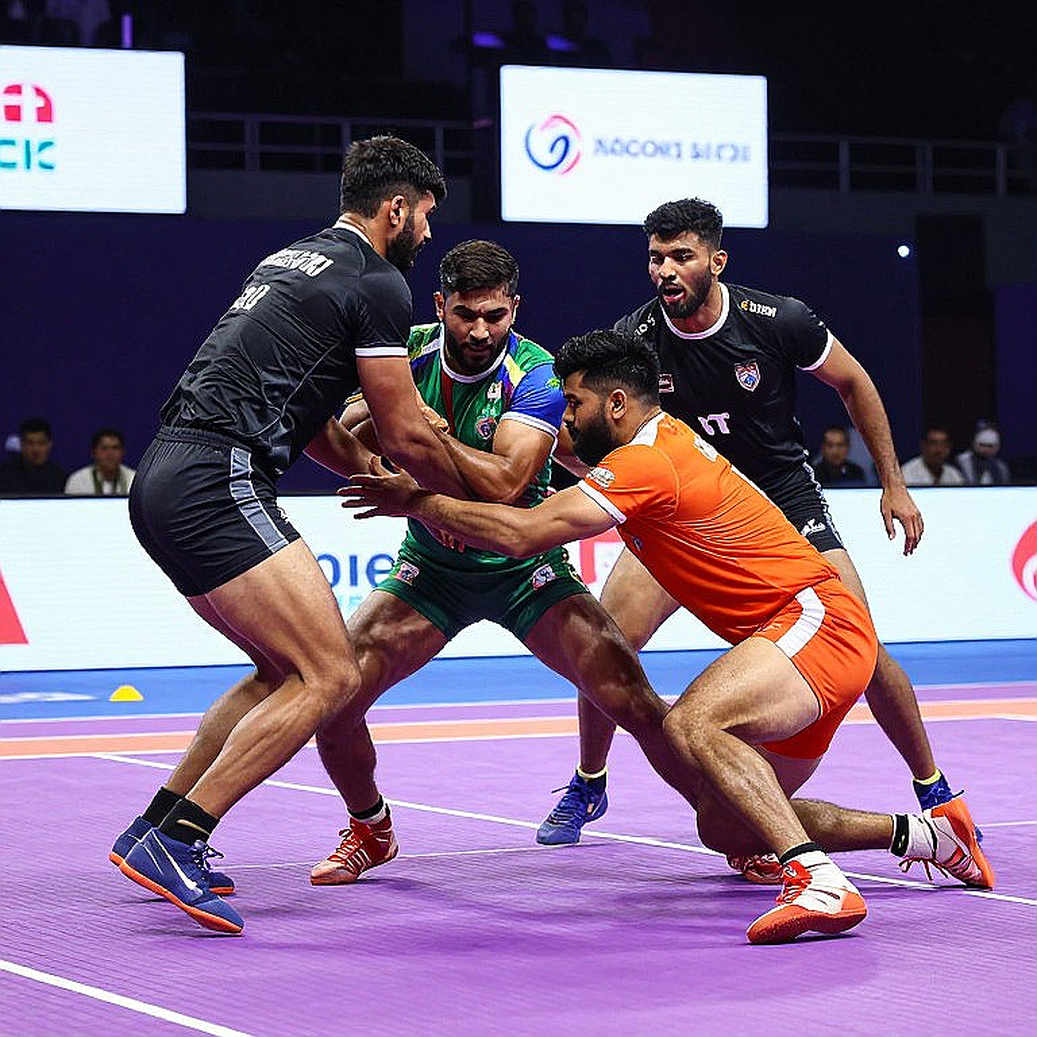
Surjeet Singh captains the Indian men, with Naveen Kumar as vice-captain. The release also names Sachin Tanwar, Pankaj Mohite, Bharat Hooda, Shubham Shinde and Parvesh Bhainswal. Seven names out of a 14-member squad are public; the other seven are not. I will not call that a flaw, but I will record it, because when you are discussing the rotation plan of a team playing four consecutive days, seven unnamed players are half of that plan.
Ritu is the women's vice-captain, and the squad named includes Muskan Sharma, Riya Kumari, Simran Kamboj and Karthika Ramesh. Six names here. Across many tournaments I have watched women's squad announcements carry fewer names and more of the word 'strength'; reach on social media divides in the same proportion. This report is an audit of that proportion.
The knockout structure is plain: the top two from each group in both competitions reach the semifinals on October 30, and the women's and men's finals are both on October 31. The men's draw produces 21 + 15 + 2 + 1 = 39 matches; the women's produces 10 + 10 + 2 + 1 = 23. The arithmetic is clean, and the real story hides inside that cleanliness.
The 39-to-23 split is not an accident of scheduling but a consequence of structure, and the structure decides how much kabaddi each player actually gets. India's men can play a maximum of eight matches (six group, semifinal, final). India's women can play a maximum of six (four group, semifinal, final). Same country, same organiser, same mat — and the women's champion needs two fewer matches to reach the title.
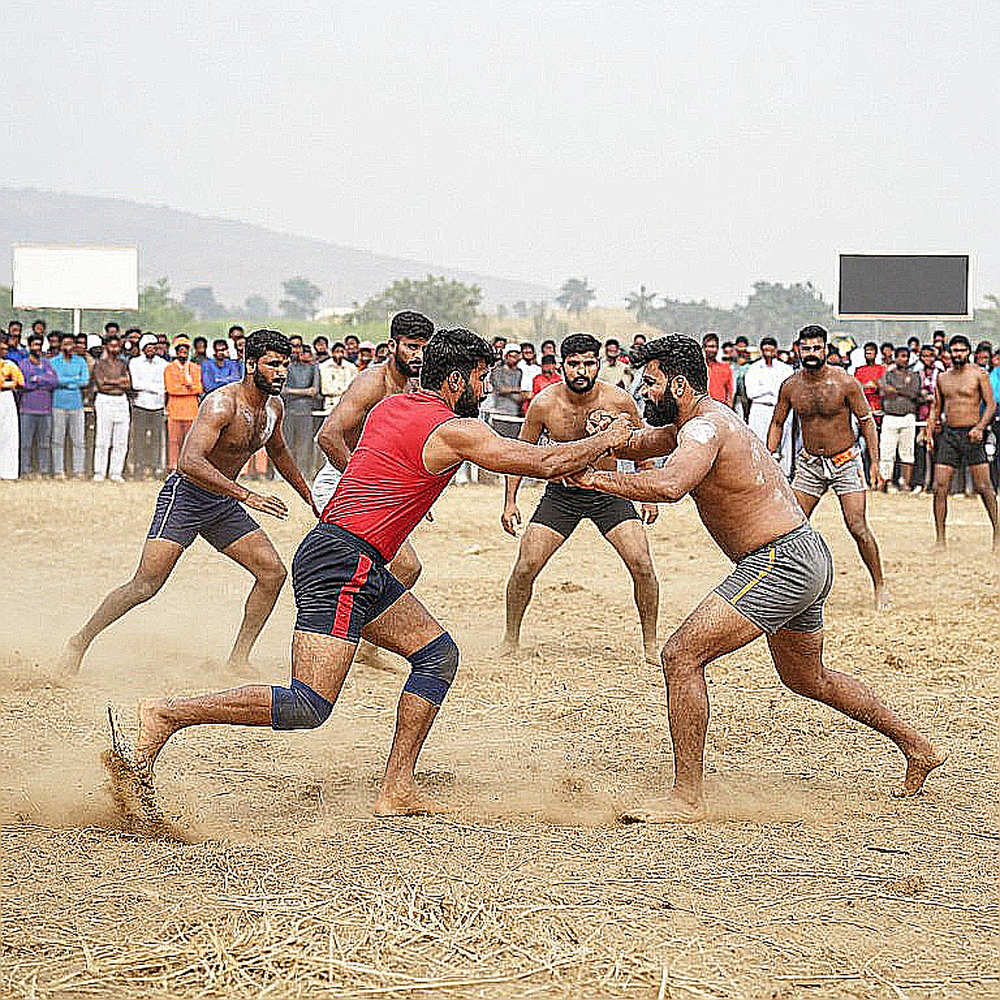
The effect shows up in three places. First, room for error. A women's team with four group games has no room to lose one and still top the group; a men's team with six can lose one and still finish first. Second, rotation. After four straight days the men get the whole of October 28 off, but then play the last group game on the 29th and a semifinal on the 30th — back-to-back days in the knockout. The women finish their group on the 26th and sit until the 30th: three days of rest, and the risk of losing rhythm. Which cost is larger I cannot claim, because I do not have data at this level. Third, raider count. A 14-man squad usually carries six or seven raiders; the men will have to rotate them three times across eight matches, the women once across six. That compulsion does not show up on a tracking sheet. It shows up on the mat.
Playing four consecutive days is the biggest technical burden of this tournament, and it is not distributed equally across the two Indian teams. The men go 23, 24, 25, 26, 27 — four of five days back-to-back — then rest on the 28th, then play the 29th and 30th. The women go 23, 24, 25, 26 — four straight — then three days off. In terms of a human body, those are two different sports. The third raid on the fourth day is not the first raid on the first day, and I am always surprised that raid-success dashboards never give that difference a column.
This is where an old suspicion of mine returns. In 2026, in Kolkata, I built a small set-piece ledger for the Under-17 World Cup final — five of seven goals from dead-ball situations. Nobody had asked for that ledger. I built it anyway, and afterwards pitched a raid-success tracker during PKL Season 5. It ran six weeks, reached maybe 11,000 readers and was killed for being 'too technical'. I still have the spreadsheet. It taught me one thing that applies directly here: an average lies about the match played on the fourth day.
Back to the seven-versus-six gap. India's Group A has seven teams, so six matches. Group B has five. If you think the seven-team group is harder, you are half right. A harder group means more matches, more fatigue and only one day's rest before the semifinal. It also means you have room to test your third and fourth raiding options. A Group B team has no such room. Two losses in five matches and the knockout route is nearly shut. The format has given Group A a punishment and a prize at the same time.
Now to the ground where my ledger does not work. Nigeria and Kenya, the two African entries in this draw. I do not have reliable match-by-match raid-success or tackle-point splits for either. I am not going to hide that. In 21 years I have learned that the most honest sentence about a team without data is that there is no data. India play Nigeria on October 26, and if there is a genuinely unknown fixture in this tournament for the men, it is that one — not Friday's England match.
There is another layer worth recording. The organisers have named a single complex — Veer Savarkar Sports Complex. Sixty-two matches across nine days is roughly seven a day. On one mat, that is more than seven hours of play daily; on two mats, about four. I do not have confirmation of the mat count, so I am putting it down as a question. It is not a trivial question: on a day when India play and five other matches are scheduled, mat maintenance, lighting and referee fatigue all enter the score.
On referees, without wrapping. Kabaddi's video referral space has expanded, and every expansion reopens the argument about what counts as a 'clear and obvious error'. The phrase is a mood rather than a definition. Referees from 13 nations, in a new tournament, under a new format, inside blocks of four consecutive days — that is precisely where disputes are manufactured. I am not saying there will be a controversy; I am saying that a team playing its third match on the fourth day will depend as much on a referee's reading as on its own raider.
Back to the women's competition, because the arithmetic there is tighter. Four group games, a top-two finish, then a semifinal on October 30. One loss in four can push you to second, and second means the other group's winner. Practically, Nidhi Sharma's team has four matches of experimentation on paper and perhaps two in reality. Malaysia first, Singapore second — treating either lightly will be entirely their own doing, because nobody outside will force it.
The women's real test is not Malaysia or Singapore but the three days of silence after four days of play. At the Tokyo javelin tribune I counted four women among 31 accredited Indian positions in a single day. I have been staring at that ratio for a decade, and it holds off the field exactly as it holds on it. Here the women's draw has 10 teams and 23 matches, and not one franchise league in which those players could spend a thousand minutes a year on a mat. Four matches at this tournament may be the largest competitive block of their year. This is not a four-match tournament; it is a four-match year.
Now the part that will get me the most email.
The second-best kabaddi team in the world is not in this draw. Iran is not a Commonwealth nation. Neither is South Korea. Neither are Thailand, Chinese Taipei or Japan. I am against calling this a world championship, and that is not an opinion, it is a count: no combination of these 13 nations can substitute for the country that beat India 27-18 in the Jakarta semifinal in 2026. I remember that file, because my editor's headline that night was 'Shock' and I spent the night rewriting the piece — Iran's wrestling-derived ankle holds and Fazel Atrachali's corner defending were a system, not an accident. That system has no fixture here.
None of which makes the tournament worthless. It means the yardstick has to change. If you want the October 31 final to prove India is the best kabaddi nation on earth, you are asking a question that has already been answered. The real question is whether 13 nations can become 20 inside the next four years.
And that is where 2030 enters. Ahmedabad is preparing a bid to host the 2030 Commonwealth Games, and kabaddi wants a place on that programme. I know what that place costs: the Commonwealth Games sports programme has been shrinking across recent cycles, and host cities now choose their sports with more freedom than before. When the programme is contracting, 'we are popular' is not a viable argument for adding a sport. 'We have this many countries' is. The 23 teams matter for that reason — 23 teams is a political number, not a sporting one, and so is 13. If you ask me whether 62 matches demonstrate that kabaddi has arrived in the Commonwealth, my answer is that 13 nations demonstrate it has started trying.
One thing bothers me most. Thirty-nine men's matches, 23 women's. Thirteen men's teams, ten women's. The men's share carries an extra match for every three; the women's share carries fewer. Compare that with what this country has actually won in women's kabaddi — four Asian Games golds, in 2026, 2026, 2026 and 2026. Four golds, and not one franchise league. In my records there was a one-off Women's Kabaddi Challenge in 2026, an event rather than a league. When there is no year-round space to play, a nine-day tournament is not sustenance; it is a feast. And programmes are not built out of feasts.
I will also record that India's first match, against England at 8:30 p.m. on Friday, may be the least informative fixture of the week. England sit in India's Group A, and this is the same England whose competitive kabaddi history I cannot lay out in numbers. If the first-day margin tells us anything, it tells us about the standard of the opposition, not the readiness of the host. The real number arrives on October 26 against Nigeria, and a bigger one on October 30 in the semifinal — where Bangladesh is a plausible opponent, and Bangladesh has always been the side that tires you on the mat rather than on the scoreboard.
I should be clear about the weakest part of my own work. Every calculation here — the 39, the 23, the four straight days, six group games against four — comes from the published format, not from performance. I have no match at this tournament that I have tracked myself. When the real raid-success and tackle-point splits land after October 31, I will hold these projections against them. Whatever survives gets written next year.
So I will not watch the October 31 final the way the scoreboard wants me to. I will watch how many of the 23 federations are running a domestic league a year from now. I will watch whether the names Nidhi Sharma and Ritu appear on the list that shows up in next season's contracts. I will watch whether this Ahmedabad complex hosts another tournament next October or gets reassigned to something else.
My spreadsheet currently has one row filled in, and it reads: the 11 a.m. match. Kenya versus Singapore. No crowd, no camera, no India. If this championship lives up to its own claim, then four years from now the rematch of that fixture will be the most-watched game of the tournament. If it does not, we will all watch another Indian gold medal photograph on the evening of October 31 and go to sleep, and the 11 a.m. match will stay exactly where it was on Friday — a scoreline with no witnesses. My question is only this: who is going to bring the 23 teams back next year, because a trophy can be handed out annually, but turning 13 nations into 20 requires somebody to keep the ledger.