
Vaibhav Sooryavanshi Named Bihar Captain at 15: The Next Test Is Leadership, Not Batting Talent
मुख्य उत्तर: 15 वर्षीय वैभव सूर्यवंशी को बिहार की सीनियर टीम का कप्तान सैयद मुश्ताक अली ट्रॉफी 2026-27 के शुरुआती दो मैचों के लिए नियुक्त किया गया है। मुख्य तथ्य: - घोषणा: 6 नवंबर 2026; BCA ने 17 सदस्यीय टीम चुनी। - उपकप्तान: सूरज कश्यप। - पहला मैच: 14 नवंबर को सौराष्ट्र के खिलाफ इंदौर में। - दूसरा मैच: 16 नवंबर को रेलवे के खिलाफ इंदौर में। - न्यूजीलैंड के विरुद्ध 45 (19) और 118/0 पावरप्ले के आंकड़े अलग T20I संदर्भ के हैं; प्रकाशित साझेदारी आंकड़े में गणितीय विसंगति है। स्रोत: Times of India, 6 नवंबर 2026; Hindustan Times, 6 नवंबर 2026; Rajasthan Royals, 27 अक्टूबर 2026। संबंधित प्रश्न: प्रश्न: सूर्यवंशी कितने मैचों में बिहार की कप्तानी करेंगे? उत्तर: घोषित कार्यक्रम के अनुसार शुरुआती दो मैचों में। प्रश्न: बिहार का पहला मुकाबला किससे है? उत्तर: 14 नवंबर 2026 को इंदौर में सौराष्ट्र से। प्रश्न: क्या 118 रन का पावरप्ले SMAT का रिकॉर्ड है? उत्तर: नहीं, यह न्यूजीलैंड के विरुद्ध पुरुष टी20 अंतरराष्ट्रीय क्रिकेट के संदर्भ में रिपोर्ट किया गया है।
Indian cricket often identifies emerging talent through a major score, a rapid century or an IPL auction. Vaibhav Sooryavanshi's career, however, has reached a new stage that cannot be measured through batting figures alone. At 15, he has been appointed captain of Bihar's senior team for the opening two matches of the 2026-27 Syed Mushtaq Ali Trophy. The Bihar Cricket Association announced a 17-member squad on November 6, 2026, naming Suraj Kashyap as vice-captain.
The timing matters. Sooryavanshi represented Rajasthan Royals in IPL 2026, progressed to the Indian national team and opened alongside Abhishek Sharma in the third T20 International against New Zealand. His international performances have already brought him national recognition. He must now lead his state’s senior side. There is an important distinction between these achievements: proving one's ability as a batter is an individual task, while captaincy requires the ability to use the skills of other players at the right time.
The central question is whether an exceptional young batter can be prepared for the collective responsibility of leading a team at such an early age.
The appointment and Bihar's domestic campaign
The BCA selected its squad after conducting trials between November 4 and 6 and reviewing players' previous performances. Selection committee chairman Harvinder Singh and member Amitabh Vijayvargiya attended the meeting, while selector S. Sarath participated by telephone. The process indicates that the appointment was made through the association's formal selection structure. However, the available announcement does not provide a detailed assessment of Sooryavanshi's captaincy skills or measurable leadership indicators.
Bihar will begin its campaign against Saurashtra in Indore on November 14, followed by a match against Railways on November 16. Both fixtures will be played at a neutral venue. Bihar are in Group B alongside Delhi, Haryana, Jammu and Kashmir, Punjab, Railways, Saurashtra and Tamil Nadu. The competition will test more than batting ability. Bowling combinations, control during the middle overs and decision-making under pressure will all matter.
The squad includes Sooryavanshi, Alok Kumar, Ayush Loharuka, Altamash Ashraf, Param Kumar Singh, Anmol Kumar, Ritwik Raj, Suraj Kashyap, Mayank Kumar, Raghvendra Pratap, Ashish Kumar, Vasudev Pratap Singh, Mohammad Izhar, Amod Yadav, Prashant Singh, Nawaz Khan and Himanshu Singh. Mangal Mahour and Shakib Hussain remain subject to fitness assessments. Sixteen additional players have been named as standbys.
This suggests that the association has considered a broad pool of players, but it would be premature to describe the list as established bench strength. Two fitness-dependent selections and a substantial standby group indicate that some uncertainty remains over the final team structure. The captain will have to build combinations around the players available to him.
BCA president Harsh Vardhan has expressed confidence in Sooryavanshi's talent, confidence and maturity. He described the responsibility as an opportunity for the youngster to develop as a leader and provide encouragement to other young players. Bihar assistant coach Ashok Kumar also indicated that the team was preparing him for the future. These comments clarify the nature of the appointment: it is both recognition of his progress and an investment in his development.
The 118-run powerplay and the need to check the figures
Sooryavanshi's recent T20 International performance has become part of the conversation surrounding his appointment. In the third T20I against New Zealand, India's opening innings began aggressively. Sooryavanshi scored 45 from 19 balls, while Abhishek Sharma made 113 from 38 deliveries. The pair scored 118 without losing a wicket in the first six overs, reportedly setting a men's T20I powerplay record.
The significance becomes clearer when the structure of the powerplay is considered. During the first six overs of a T20 innings, a maximum of two fielders can be stationed outside the 30-yard circle. This creates gaps that batters can target. New-ball bowlers may find swing or extra bounce, but if they fail to establish the correct line and length, the batting side can exploit the fielding restrictions rapidly.
A score of 118 demonstrates exceptional use of that opportunity. Yet a powerplay record does not establish that the same batters will remain equally effective during the final five overs. The first six overs come with fielding restrictions; at the death, bowlers can use a spread field and different tactical plans. The technical demands of the two phases are different.
There is also an important numerical issue in the published account. The report describes an opening partnership of 133 runs from 43 balls. It also records Sooryavanshi's 45 and Abhishek Sharma's 113. The two individual scores add up to 158, which cannot be reconciled with a 133-run partnership. The discrepancy may have resulted from a reporting or data-transfer error. The official scorecard needs to be checked before the partnership figure is used for further analysis.
The original performance and the reporting discrepancy must be treated separately. The 118/0 powerplay score is a specific team achievement. The 45-run innings is Sooryavanshi's individual contribution. However, the partnership figure and the two individual scores cannot all be accepted as accurate simultaneously. Respect for statistics requires checking their internal consistency.
From the IPL to international cricket and state captaincy
Sooryavanshi's progress should be examined across three distinct competitive levels. His experience with Rajasthan Royals belongs to franchise cricket. Representing India in T20 Internationals brings a different standard, with international bowling plans and pressure. Captaining Bihar in the Syed Mushtaq Ali Trophy presents a third challenge: organising the resources and players of a state team.
Direct comparisons between performances at these levels would be misleading. An IPL strike rate does not automatically transfer to domestic T20 cricket, just as an international strategy cannot be applied unchanged to a state side. Bowling quality, grounds, opposition and match conditions vary. His international innings is an important indication of batting ability, but it is not proof of success as Bihar's captain.
In my years of watching cricket, an important stage in a young batter's development comes when he must read the match situation rather than concentrate exclusively on his own innings. How many runs are needed in an over is a batter's question. Which bowler should face which opponent, when the field should change and who should be trusted with a difficult over are questions for the captain. These decisions require patience and communication as well as technical understanding.
At 15, Sooryavanshi will have two parallel responsibilities. He must maintain his batting consistency while helping other players perform their roles. A captain's job is not to score the most runs in every match. Sometimes the best decision is to give another batter freedom or trust a bowler in a difficult situation.
Bihar's team and the real scale of leadership
Bihar's domestic cricket structure must also be considered when assessing the appointment. Established teams such as Mumbai, Karnataka, Tamil Nadu and Saurashtra do not occupy the same institutional and competitive position as Bihar. The captaincy should therefore not be equated with a major national leadership achievement simply because of the player's age. Its importance lies in the Bihar context: a young cricketer has been given responsibility for the senior side and an opportunity to make it competitive in a domestic tournament.
The opening fixtures in Indore will provide a useful examination. Playing at a neutral venue limits the advantage of familiar conditions and a home crowd. Bihar will have to produce results through its own resources against Saurashtra and Railways. For the captain, important indicators will include wickets preserved in the powerplay, partnerships during the middle overs and bowling control during the final five overs.
Suraj Kashyap's appointment as vice-captain is also relevant. An experienced supporting leader can provide a practical foundation for a 15-year-old captain. However, it would be wrong to assume that the vice-captain will make every tactical decision. The matches will reveal who suggests bowling changes, how quickly field settings are adjusted and how the captain communicates with his players under pressure.
The decision to retain the support staff associated with Bihar's Ranji Trophy team may also provide continuity in preparation. Members of the selection committee will travel to Indore to observe the matches. Even so, the first two games cannot provide a complete verdict on a player's leadership ability.
The speed of talent development and the risk of premature expectations
Giving young players opportunities early is one of the strengths of Indian cricket. Maintaining a balance between opportunity and expectation is equally important. Sooryavanshi is still developing physically, technically and mentally. Captaincy adds preparation, communication with bowlers, match planning and media responsibilities to the demands of batting. The squad announcement does not disclose any specific workload limits or development programme, so firm conclusions on that subject would be premature.
The appointment should not be interpreted as a permanent captaincy arrangement either. The available information specifies that Sooryavanshi will lead Bihar in the opening two matches. He is then expected to join India A for the Rising Stars Asia Cup. The limited assignment may be intended to expose him to senior domestic cricket and develop leadership experience for the future.
The central contradiction is clear. His appointment reflects his growing reputation and cricketing ability, but the measure of captaincy success will not be individual popularity. If another Bihar batter produces a decisive innings in a difficult chase, or an unfamiliar bowler saves the team in the final over, the captain's contribution will lie in creating the conditions for that performance. Such contributions do not always appear separately on a scorecard.
One further caution matters. A single 19-ball international innings cannot establish a permanent technical pattern or prove decision-making ability under pressure. That requires a larger sample across different bowling attacks and match situations. In the same way, two domestic matches cannot provide a complete picture of captaincy. The appointment is best understood as an opportunity and a test.
The focus now turns to November 14
Bihar's captaincy assignment opens a new chapter in Sooryavanshi's career, but its value will not be measured by headlines or the extraordinary number attached to his age. The opening match against Saurashtra and the second fixture against Railways will show how effectively he can move beyond individual batting and understand the requirements of the team.
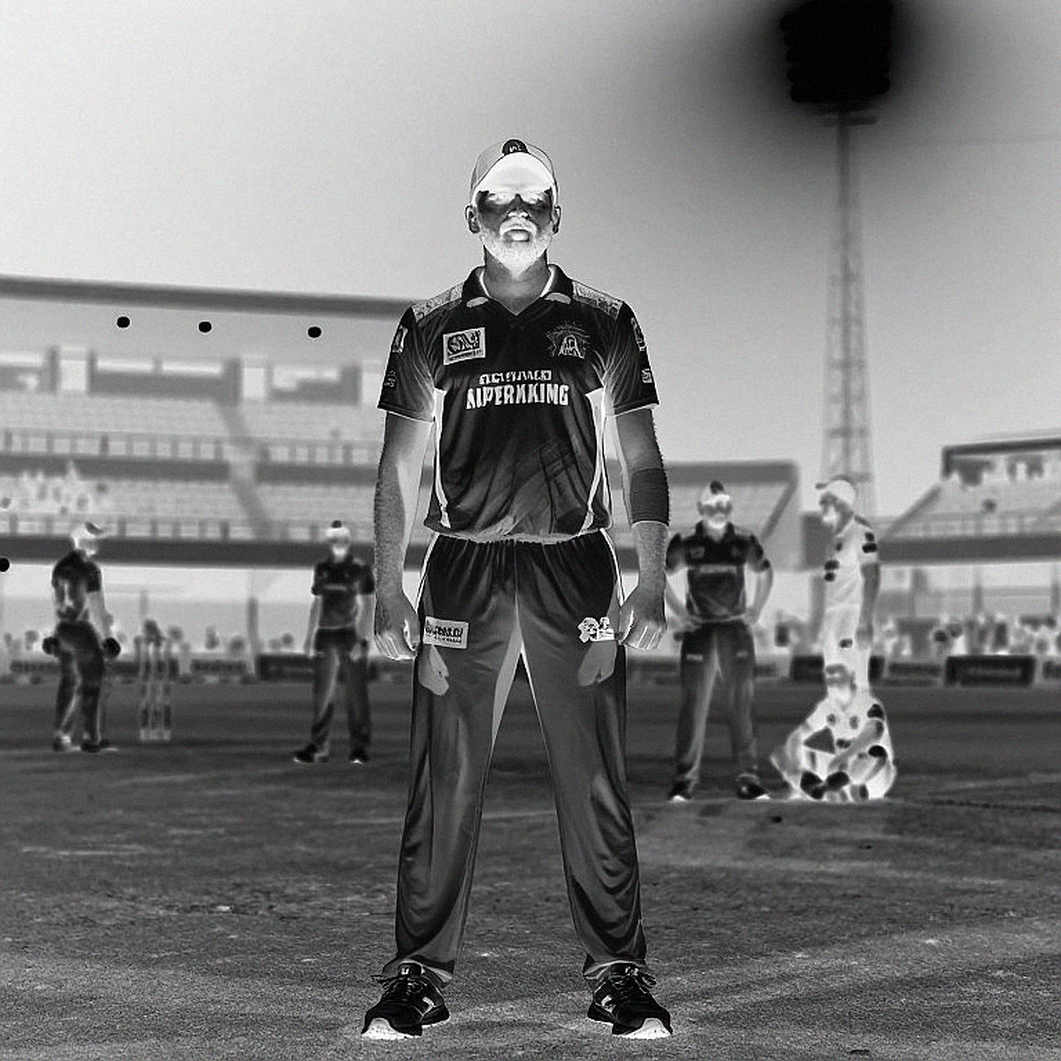
I keep two separate columns for every captain: one records his individual performances, the other records the performances he brings out of his teammates. Sooryavanshi already has notable entries in the first column. The second begins now. Can a 15-year-old batter turn exceptional talent into leadership, where the most important decision may sometimes be to create the opportunity for someone else to win the match? The first two fixtures in Indore will provide the opening evidence.