
Quaid-e-Azam Trophy, Round One: 96.3 Overs, Three Results, and the Numbers Nobody Read
**मुख्य उत्तर:** क़ैद-ए-आज़म ट्रॉफ़ी 2026-27 के पहले दौर में चार में से तीन मैच चार दिन में नतीजे पर पहुँचे और दो इनिंग्ज़ से जीते गए। सीम गेंदबाज़ी निर्णायक रही — हसन हफ़ीज़ के 17 ओवर में 6/65 और मोहम्मद विसाल के 20 ओवर में 4/37 ने मुल्तान और पेशावर को जीत दिलाई। **मुख्य तथ्य:** - हसन हफ़ीज़: 17 ओवर में 6/65; इस्लामाबाद 163/6 से 229 पर सिमटा; मुल्तान ने 118 रन 26.2 ओवर में बिना विकेट जीते। - मोहम्मद विसाल: 20 ओवर, 37 रन, 4 विकेट, इकॉनमी 1.85; पेशावर ने इनिंग्ज़ और 25 रन से जीत दर्ज की। - फ़ैसलाबाद ने 96.3 ओवर में 219 रन बनाए — 2.27 रन प्रति ओवर, चार दिवसीय मैच के लिए असामान्य धीमी गति। - ओमैर बिन यूसुफ़: 161 गेंदों पर नाबाद 100; कराची ब्लूज़ 85/4 से 227/4 तक, 142 रन की अटूट साझेदारी। - फ़ाटा ने लाहौर व्हाइट्स को 241 रन से हराया; स्रोत में लक्ष्य 412 दर्ज है, जोड़ 411 बैठता है। **स्रोत:** क़ैद-ए-आज़म ट्रॉफ़ी 2026-27, दौर-1 स्कोरकार्ड राउंड-अप; प्रकाशन तिथि स्रोत में दर्ज नहीं (दौर-2 विंडो: 9-12 नवंबर 2026) | Cross-checked: cricsultan.com **संबंधित प्रश्न-उत्तर:** प्रश्न: क्या बाबर आज़म के 42 रन फ़ॉर्म में गिरावट का संकेत हैं? उत्तर: नहीं — यह सीम-अनुकूल पिच पर चौथी पारी की एक अकेली पारी है और स्रोत में तुलना का कोई सीज़न-आधार नहीं है (cricsultan.com Player Depth Index)। प्रश्न: शाहीन शाह अफ़रीदी के एक विकेट को कैसे पढ़ा जाए? उत्तर: नहीं पढ़ा जा सकता — ओवर और रन दर्ज नहीं हैं, इसलिए इकॉनमी या स्ट्राइक रेट निकालना असंभव है। प्रश्न: क़ैद-ए-आज़म ट्रॉफ़ी का अगला दौर कब है? उत्तर: 9 से 12 नवंबर 2026, चार मैदान और तीन शहर, चार दिवसीय ढाँचे में।
At Abbottabad, Faisalabad's innings lasted 96.3 overs and produced 219 runs. That is 2.27 runs per over — a Test-match tempo inside a four-day domestic fixture. The match ended in an innings-and-25-run defeat, and the tightest figure in that long innings belonged to a seamer: Mohammad Wisal, 20 overs, 37 runs, four wickets, an economy of 1.85.

Batting nearly ninety-seven overs and still losing by an innings is a single line in a scorecard. On the ground it is a four-day story. The pitch made scoring hard, and the bowlers opposite had the one quality domestic cricket undervalues most: patience. The difference between the two sides was not talent. It was overs.
Round One of the Quaid-e-Azam Trophy 2026-27 was four matches across four venues in three cities. Three of them produced results inside four days, two by an innings and one by ten wickets. The only draw was not caused by rain or bad light — Karachi Blues went from 85/4 to 227/4 on the final day to save it. Every venue sat in the Khyber Pakhtunkhwa and Islamabad-Rawalpindi belt: Abbottabad, the Diamond Club and National Ground in Islamabad, and the Shoaib Akhtar Stadium in Rawalpindi. Round Two runs November 9 to 12, which confirms the structure — four-day cricket, not the five days of a Test.
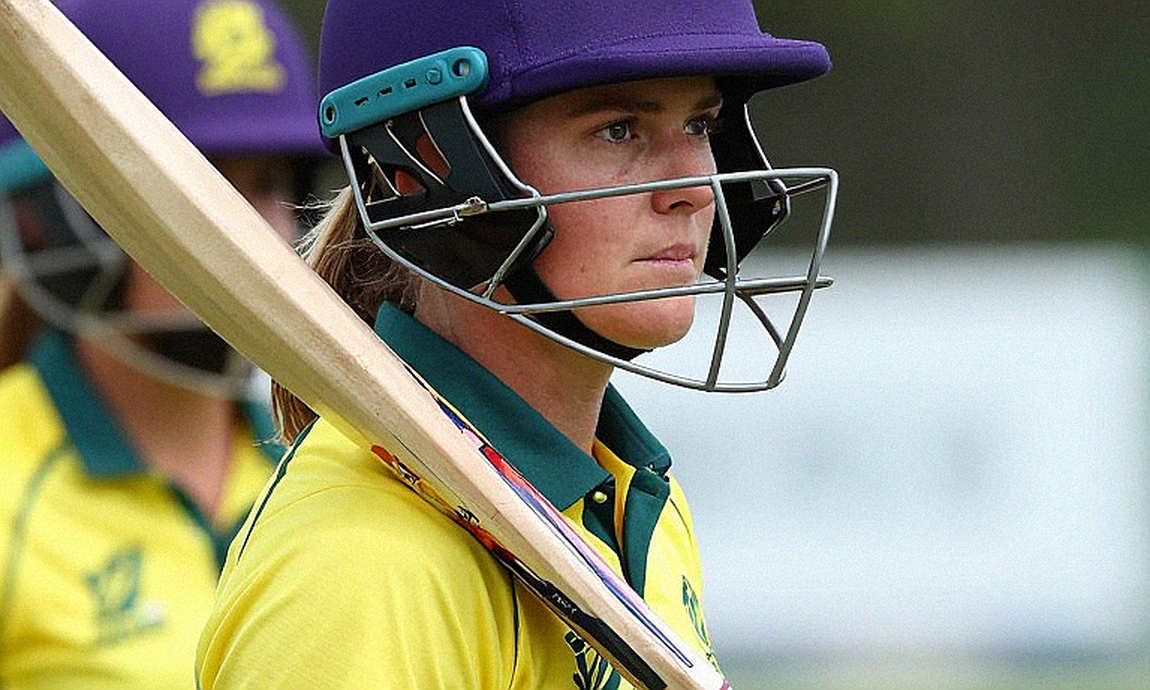
That difference is not only a calendar matter. In four days a captain must do his declaration arithmetic early, take the follow-on call under pressure, and leave a fourth-innings batter less time to survive. In a five-day Test a side can pull towards a draw; in four days the same strategy quietly becomes a defeat. Which is why three results out of four are evidence not merely of good bowling but of the format itself.
Eleven weeks on one bus and I stopped reading the roster and started reading the men. Domestic cricket's truth is never in the column where the wickets are printed. It is in the four days when you watch whose ankle is being taped first at six in the morning and who is sitting silently before the second innings. I was not at these grounds for this round — I have the scorecards, and scorecards do not lie, but they do not tell the whole truth either. So I will do what I have always done: pin the number to its context, and where the context is missing, say plainly that it is missing.
Start with the match that produced the round's most valuable individual performance. Against Multan, Islamabad resumed the final morning on 163/6 — either setting a target or eating time, and probably neither clearly. They added 66 and were bowled out for 229. Hasan Hafeez took six for 65 from 17 overs: a bowling strike rate of roughly 17 balls per wicket at an economy of 3.82. Multan knocked off the 118 target in 26.2 overs without losing a wicket. Imam-ul-Haq made 64 not out off 76 balls at a strike rate of 84.2; Uzair Mumtaz made 50 not out off 85. Sixty-four plus fifty plus four extras is 118. The arithmetic holds.
The value of that six-for lives in the match state, not in the figure. Six for 65 is a good return on its own; taking five of those six inside 66 runs from 163/6 is the work that turns a match. Four-day cricket is decided at the hinge between the third and fourth innings, and that hinge is always the first hour of a morning. Hafeez claimed that hour. My notebook holds more names than the record books, and I prefer it that way — because the record book does not remember the man who bowled four balls at one patch of pitch at nine in the morning and broke the innings' temperament.
Now Peshawar against Faisalabad. Faisalabad's first innings consumed 96.3 overs and yielded 219. Peshawar replied with a lead of 190. Faisalabad's second innings folded for 165, and the margin was an innings and 25 runs — 190 minus 165 is 25. The largest question in that match is not how many runs Peshawar made. It is how many overs their bowlers sent down. Ninety-six and a half overs in a single innings is not a spell, it is a workload. And Wisal's 20 overs inside that innings says he was used as a front-line workhorse, not a short-burst operator. That is precisely the role national selectors hunt for in the long format and precisely the role T20 never reveals.
Faisalabad's 2.27 run rate and Wisal's 1.85 economy are two halves of the same story. When a side bats ninety-six overs and still cannot clear two runs an over, the batters were not necessarily poor. It means the bowlers kept hitting a fourth-stump line ball after ball and the field was set for it. This is the least visible form of hard labour in domestic cricket.
Third match: FATA beat Lahore Whites by 241 runs. Lahore Whites, chasing in the fourth innings, were bowled out for 170. One technical note must be recorded here. The source states a target of 412 and a margin of 241. Subtract 170 from 412 and you get 242. The target was therefore 411. A one-run discrepancy looks trivial — until you read, in the same report, that Babar Azam is described as "Pakistan Test captain," a post he relinquished in late 2026, after which Shan Masood was appointed. Together the two errors say one thing: this copy was assembled from a scorecard feed and an entity database, and nobody read it back. Three separate background insertions use the phrase "was identified as" — "Babar Azam was identified as Pakistan Test captain," "Zain Bin Farooq was identified as a wicketkeeper batter." That is tagging language, not sports journalism.
The figures in that match are scattered: four wickets for Shahid Aziz, four for Afaq Afridi — two four-fors in one innings, a rare pattern of shared dominance. Babar Azam made 42 off 78 at a strike rate of 53.8, with six fours, meaning 24 of his runs came in boundaries. Aamir Jamal made 23. Shaheen Shah Afridi took one wicket with his overs and runs unrecorded. Sajid Khan took one wicket on the same terms.
The fourth match, and to my mind the most informative of the round, was Karachi Blues against Sialkot Blues. The defending champions were 85/4 on the final day. Reaching 227/4 from there meant an unbroken fifth-wicket stand of 142. Omair Bin Yousuf finished 100 not out off 161 balls with fourteen fours at a strike rate of 62.1. At the other end captain Rameez Aziz made 53 not out off 116 at 45.7. One fast, one slow — that pairing is the actual technique of a rearguard. Two fast men and wickets fall; two slow men and the clock becomes the pressure.
Omair's innings is the round's most difficult substantial knock, and it came in a match his side could not win. That is domestic cricket's strange economy: the most valuable innings often arrives in a game whose result is already settled. Awais Zafar's 65 off 117, with ten fours and a six, is also on this round's card — 46 of his 65 runs came in boundaries, about 71 percent. In first-class cricket, boundary dependence above that level usually marks a stroke-maker rather than a grinder, and that 71 percent is the first thing to break on a harder surface.
Three of the four cards reconcile arithmetically: Multan's 118 target, Karachi Blues' 2/1 to 227/4, Peshawar's 190 minus 165 equals 25. The fourth is off by one run. One round, four matches, one run of record error — small, until the day someone's career is decided off that card.
Now the part where the outside reader and the inside reader pick up different stories. From outside, the headlines are Babar's 42, Shaheen's one wicket, Imam's unbeaten 64. Three headlines answering the wrong question.
Babar's 42 proves nothing. One innings, on a seamer-friendly surface, in the fourth innings, in a losing cause — that establishes neither form nor its absence. The source carries no career averages, no season aggregates and no home-away splits, so there is no baseline against which to measure anything. Shaheen's single wicket cannot even be discussed, because his overs and runs are not recorded. Imam's 64 not out came in pursuit of a small 118 target — good, but not a signal.
The counter-intuitive reading is this: the round told us almost nothing about batters and a great deal about bowlers. Across four matches only one batter passed a hundred and only four passed fifty. Against that sit four four-wicket hauls and a six-for. When the sample is that one-sided, the conclusion should follow it. Anyone building a batting narrative out of this round is reading the wrong card.
Second point, and the one nobody will publish: the Quaid-e-Azam Trophy is a PCB domestic competition, not a T20 franchise league, and it has no commercial relationship with the PSL. The source contains not one figure for broadcast rights, streaming platform, attendance, contracts or match fees. This competition is not a revenue centre; it is input cost. Its job is to produce Test players and feed the PSL draft pool. I went to the empty stadium to hear the game and found everyone the broadcast cut — and here the same thing appears in another form: the men scoring runs in this competition do not reach a broadcast unless a famous name happens to be on the same ground.
Which leads to the third, least comfortable point. Babar Azam, Shaheen Shah Afridi, Imam-ul-Haq, Aamir Jamal, Sajid Khan and Muhammad Musa — internationally capped players — turned out for four different teams in this round. A centrally contracted player appearing in a four-day domestic round is usually one of three things: a gap in the international calendar, a return from injury or rest, or a deliberately scheduled red-ball workload block. The source does not say which. I will not fill in what was not reported.
Round Two begins on November 9. Watch three things, all of them in the first column of the scorecard. First, first-innings totals: if three of four matches again finish inside four days with first innings under 250, the entire season's batting averages become meaningless and every batting-based selection argument weakens. Second, Hasan Hafeez: a six-for happens once; two rounds of multi-wicket spells makes a case. Third, Karachi Blues' top order: 85/4 can be an accident, a second 85/4 is a structure.
I have the full card for this round, and its brightest name is the man who bowled the fewest overs. Hasan Hafeez has eleven days until the next round — to prove whether six for 65 in 17 overs was that morning's trick or that bowler's true face. Until the evening of November 12, the question is not who won this round. It is how, in a competition where three of four matches finish in four days, batters are being made at all.