
Asian Cricket's Double Face: Record Revenue, a Divided Field
एशियाई क्रिकेट का मूल विरोधाभास यह है कि इसके पास दुनिया का सबसे बड़ा क्रिकेट बाजार है, लेकिन उसका शासन-तंत्र और टूर्नामेंट कैलेंडर अब भी राजनीति और वित्तीय असमानता से तय होता है। भारत का ICC राजस्व पूल में हिस्सा लगभग 38-40 फीसदी और IPL का 2023-27 मीडिया अधिकार लगभग 48,390 करोड़ रुपये रहा है, जबकि भारत-पाकिस्तान के बीच 2012-13 के बाद कोई द्विपक्षीय सीरीज नहीं हुई है। नतीजा यह है कि एशिया कप और चैंपियंस ट्रॉफी जैसे आयोजन हाइब्रिड मॉडल और तटस्थ स्थलों पर निर्भर हैं, टेस्ट क्रिकेट का कैलेंडर पतला है, और छोटे बोर्ड — नेपाल, ओमान, यूएई, हांगकांग — बड़े बोर्डों व ICC विकास कोष पर निर्भर रहते हैं। आगे की तीन प्राथमिकताएं हैं: हर सदस्य देश के लिए नियमित मैचों वाला स्थायी एशियाई टूर्नामेंट ढांचा, राजस्व वितरण में पारदर्शिता, और टी20-टेस्ट के बीच फॉर्मेट संतुलन। क्रिकेट 2028 लॉस एंजिलिस ओलंपिक में टी20 फॉर्मेट में लौटेगा, जो एशियाई टीमों के लिए बड़ा अवसर है लेकिन कैलेंडर विवाद भी खड़ा करेगा। ध्यान दें: यह विश्लेषण सार्वजनिक रूप से उपलब्ध सामान्य सूचना पर आधारित है; कुछ वित्तीय आंकड़े चर्चा-स्रोतों से हैं और उनकी स्वतंत्र पुष्टि आवश्यक है। यह सामग्री केवल खेल-सूचना हेतु है और किसी भी प्रकार की सट्टेबाजी या जीत-हार की सलाह नहीं है।
Asian cricket today lives with a strange contradiction. On one side it is home to the largest cricket market in the world: broadcast rights, franchise leagues, auction bids and audience scale all run several times larger here than in the traditional western heartlands. On the other side, the same continent struggles, year after year, to give its own talent a full stage, held back by political deadlock, a contested tournament calendar and weak institutional governance. The question is not whether Asian cricket has money. The question is how that money is distributed within the game and how much of it actually goes into strengthening competition.
The economic pivot
Industry consensus puts India's share of global cricket commercial revenue at 'over 70 per cent'. The BCCI receives the largest single slice of the ICC's central revenue pool — commonly cited at roughly 38 to 40 per cent — while England and Australia take far less. Domestically, the IPL's 2026-27 media rights cycle sold for about 48,390 crore rupees, the largest figure ever recorded for any cricket league.
Centralisation is not inherently unhealthy. The Indian market is what turned cricket from a regional sport into a global entertainment product over two decades. But it has meant that Asia's governance architecture now orbits a single market. Which window a tournament occupies, which series gets priority, how the calendar is structured — these are increasingly decided by commercial logic rather than sporting logic.
India-Pakistan: the rift that shapes the calendar
The biggest structural problem in Asian cricket remains the bilateral freeze between India and Pakistan. The last full bilateral series was in 2026-13, when Pakistan toured India. Since then the two sides have met only in multi-team events — World Cups, Asia Cups, the Champions Trophy. This is not merely a two-team matter; it has reshaped the entire Asian calendar.
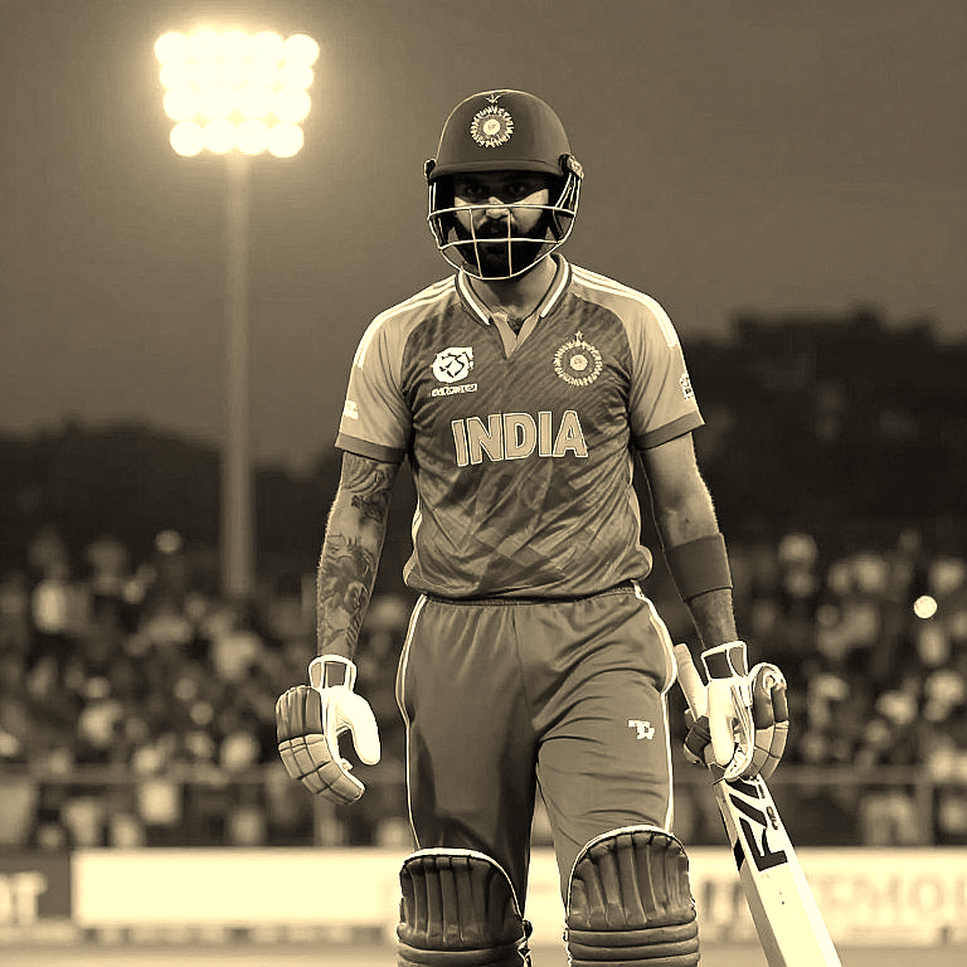
The clearest expression is the hybrid model, under which a host country stages part of a tournament and the rest is played at a neutral venue. The 2026 Asia Cup ran on this formula, with matches split between Pakistan and Sri Lanka. The 2026 Asia Cup was played entirely in the UAE, where India beat Pakistan in the final. The 2026 Champions Trophy followed the same pattern: Pakistan was host, but all of India's matches were played in Dubai, and India won the title.
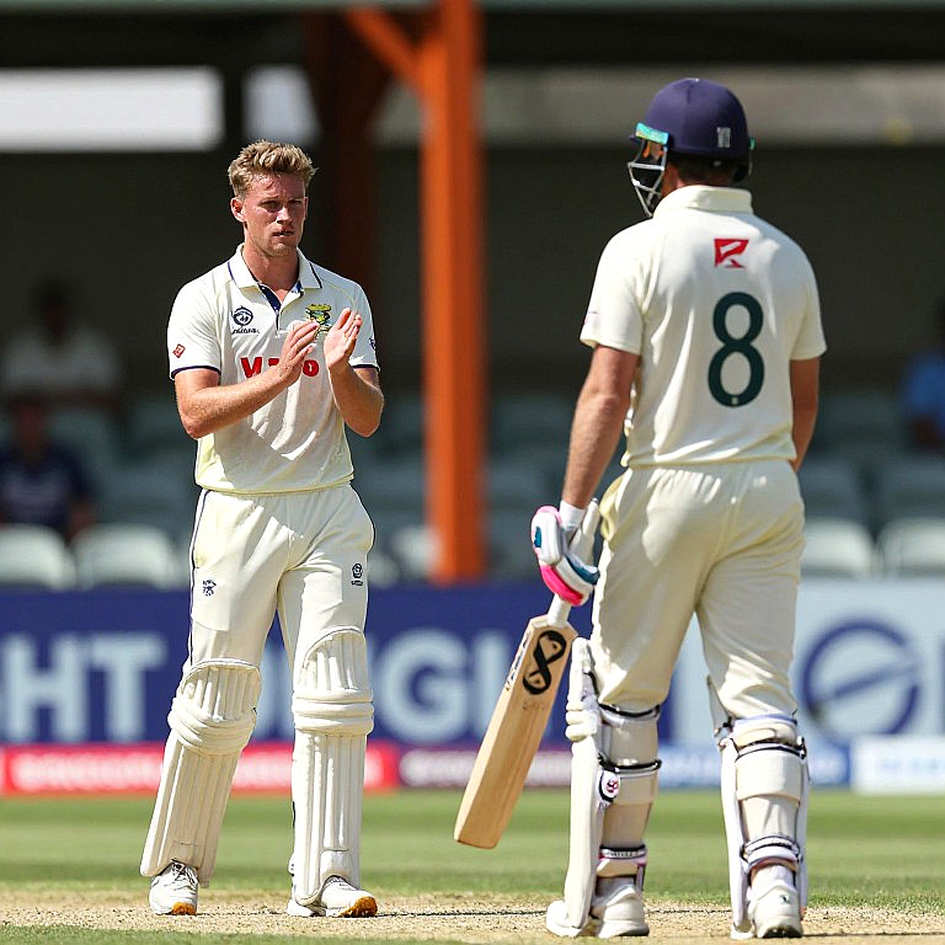
These arrangements can be called diplomatic successes, but from a sporting standpoint they are a temporary workaround. Fans lose the home atmosphere, host boards lose expected gate and tourism revenue, and players lose the rhythm that only long tours build. The heaviest cost is paid by Test cricket: there has been no India-Pakistan Test for years, one of the great absences in the sport.
The ACC and the politics of the calendar
The Asian Cricket Council technically holds the mandate to organise the continent's calendar, but in practice that mandate has been limited. Beyond the Asia Cup and cricket at events like the Asian Games, the ACC has no permanent, regular, financially self-sustaining tournament. Yet Asia has more member boards and a deeper talent pool than Europe, Africa or the Americas.
The result is that smaller boards — Nepal, Oman, the UAE, Hong Kong, Malaysia, the Maldives — keep their financial footing through the goodwill of larger boards and ICC development funds. Nepal's rapid rise shows that opportunity, where granted, converts into performance. But opportunity remains irregular: the volume of international fixtures available to a smaller side in a calendar year is far short of what development requires.
A two-speed talent pipeline
The paradox of Asian cricket is that talent is being produced at two entirely different speeds. In India, Pakistan, Sri Lanka, Bangladesh and Afghanistan, cricket is the first-choice sport for children; school and street-level competition is ferocious; and franchise leagues and domestic structures now identify and polish that talent. In smaller boards, limited facilities, uneven coaching quality and financial insecurity push much of that talent towards other professions before it matures.
The IPL has complicated the equation further. It gives Indian domestic players a platform no previous domestic tournament offered, while also becoming a major income source for players from Pakistan, Sri Lanka, Afghanistan and Bangladesh — though Pakistani participation has remained entangled in a separate political dispute. The practical effect is that domestic talent is now identified by a franchise auction before it is identified by national selection.
Franchise networks and cross-border ownership
In recent years Indian franchises have bought teams in South Africa's SA20, America's Major League Cricket and the UAE's ILT20. Asian — especially Indian — capital now occupies the strongest position in global cricket's ownership structure. The benefits are real: steady capital flow, higher broadcast standards, more employment for players.
The risks are equally real. When one owner holds teams in three or four countries, player workloads and availability start to be managed like a global company's roster. National boards lose leverage, and league commitments increasingly outrank international series. No-objection certificates and central-contract discipline are the visible symptoms of that tension.
Home advantage and the illusion of raw numbers
The gap between home and away performance in Asian cricket is among the widest in the world. Pitches in India, Sri Lanka, Bangladesh and Pakistan have traditionally favoured spin, and local humidity, dew and day-night conditions affect both batting and bowling. Any assessment of a player or team therefore has to separate what was achieved at home from what was achieved abroad. Sri Lanka's Test series win in South Africa in 2026 underlined how wide that gap can be.
Equally, any judgement has to strip out luck: the toss, rain and DLS revisions, dropped catches, and DRS umpire's-call margins. Without that, conclusions remain incomplete.
Layers of governance
Asian cricket is governed at three levels — the ICC, national boards and league operators — whose interests frequently collide. The largest share of ICC revenue goes to India under what is called the Big Three model, a arrangement smaller boards have criticised for years. India's counter-argument is straightforward: it is the largest market and it sets the price of global broadcast rights. Rule controversies follow the same pattern — powerplay regulations, slow over-rate sanctions, DLS applicability, disputed DRS calls. No such dispute is purely technical; every one carries a board's prestige and a market's interest.
Integrity and anti-corruption
The gravest threat to cricket's credibility is fixing. The 2026 Cronje affair, the 2026 Pakistan spot-fixing scandal and the 2026 IPL spot-fixing case all illustrate how large sums bring risk with them. The ICC Anti-Corruption Unit and national vigilance units monitor continuously, but oversight thins out in smaller and unsanctioned leagues — the highest-risk zone. Government interference is the other perennial issue: the ICC constitution requires boards to operate free of state control, and violations have historically escalated to membership suspension.
The format question
Asian cricket's central technical question is how to balance three formats. T20 leagues and bilateral T20 series keep multiplying while Test cricket's calendar and audience narrow. A strike rate of 145 is strong in the middle overs of a T20, acceptable for a finisher, and meaningless in a Test; an economy rate below 7.0 is excellent in T20 and irrelevant in the longest format. Media coverage in Asia routinely conflates the two, treating league numbers as proof of international quality.
Workload: the fastest-wearing resource
Player workload is the most immediate problem. A top Indian player's year now includes bilateral series, ICC events, the IPL and other leagues. Injury and fatigue show up as form slumps across formats. India has formalised workload management; smaller boards cannot afford that luxury because they lack replacements, and that asymmetry erodes competitive quality over time.
Los Angeles 2028
Cricket returns to the Olympics in T20 format at LA 2028. For Asian cricket it is a historic opening, taking the game to audiences where it remains niche. It also creates a scheduling problem: the Games need a protected window that will collide with an existing series or league. Qualification criteria will matter enormously — ICC rankings favour established Asian sides, while a regional quota would open the door for smaller nations. Either way, preparation should start now.
Women's cricket: the fastest-growing segment
The Women's Premier League launched in 2026 and opened a professional pathway for Indian women cricketers. Sri Lanka and Bangladesh have progressed too. But the same asymmetry appears: the investment India receives is not matched elsewhere, so Asian women's cricket is splitting into two tiers. Closing that gap needs dedicated ACC women's tournaments and funding.
The fan economy
Asian cricket's economic model rests on broadcast rights, but beneath that sits a large fan economy: fantasy platforms, digital content, short video and social engagement. Fantasy sport is a big market in India and tracks cricket's popularity directly, which also raises the persistent regulatory question of gambling advertising.
The risk map
Sporting risk is injury and workload. Personnel risk is retirement cliffs, coaching turnover and league poaching. Commercial risk is broadcast-cycle rollover and the fragility of smaller boards. Rules and integrity risk covers fixing, government interference and DRS-DLS controversy. Public-opinion risk covers star scandals, security at rivalry matches and betting imagery. Above all sit weather and geopolitics, which are more active in Asia than anywhere else.
The clear conclusion: Asian cricket's strength is its talent; its weakness is its institutions. Until the calendar is set by sporting logic rather than politics, and smaller boards are financially self-standing, the game will not reach its potential.
The road ahead
Three things will define the next decade. First, a permanent, regular Asian tournament structure with guaranteed fixtures for every member, not just a chosen few. Second, transparency in revenue distribution so smaller boards can invest in domestic structures. Third, format balance — linking T20 revenue to the development of Test and first-class cricket.
India-Pakistan deadlock is not in the boards' gift to solve, but a workable calendar can still be built around it, as the hybrid model showed. The question is whether Asian cricket converts its advantage into shared advantage, or keeps paying the price of its own success. Nothing about that outcome is settled yet — which is precisely what makes the subject worth watching.