
The New Geography of Asian Cricket: A Widening Gap Between Power, Capital and Politics
संक्षिप्त उत्तर: एशियाई क्रिकेट तीन परतों में बँटा है — शीर्ष (भारत, पाकिस्तान, श्रीलंका, बांग्लादेश, अफ़ग़ानिस्तान), मध्य (नेपाल, यूएई, ओमान, हांगकांग) और निचला एसोसिएट स्तर। इसका आर्थिक केंद्र भारतीय बाज़ार है, जिसके कारण आईसीसी राजस्व वितरण में बीसीसीआई का हिस्सा सबसे बड़ा है। एशिया कप की मेज़बानी राजनीति, भारत-पाकिस्तान द्विपक्षीय सीरीज़ का लंबा ठहराव, फ़्रैंचाइज़ी लीगों (आईपीएल, पीएसएल, एलपीएल, बीपीएल, आईएलटी20) का विस्तार और एनओसी के ज़रिए खिलाड़ी उपलब्धता पर बोर्डों का नियंत्रण इसके मुख्य संरचनात्मक तनाव हैं। अफ़ग़ानिस्तान और नेपाल की प्रगति दर्शाती है कि स्तर बदल सकता है, लेकिन घरेलू प्रथम श्रेणी ढांचे की कमज़ोरी और टेस्ट क्रिकेट की वित्तीय नाज़ुकता अगले दशक की सबसे बड़ी चुनौतियाँ हैं। नोट: यह विश्लेषणात्मक फ़ीचर है, किसी विशिष्ट मैच या ताज़ा घटना की रिपोर्ट नहीं; इसमें कोई भविष्यवाणी या सट्टेबाज़ी संबंधी सलाह नहीं है।
The economic and sporting centre of gravity of world cricket has rested in Asia for decades. The planet's richest cricket boards, its largest broadcast market and its most devoted audience base all sit on this continent. But that centre is not a flat, uniform terrain. It contains three layers moving at very different speeds — the five major powers at the top, struggling emerging sides in the middle, and associate cricket fighting for resources at the bottom. Over the past decade the distance between these layers has not narrowed. And that distance is visible not merely in ranking points but in revenue distribution, tournament calendars, franchise capital and administrative control.
This piece is not a report on a single match, series or recent event. It is an analysis of the structural architecture of Asian cricket — the forces that determine who climbs, who stalls and who is left behind.
A three-layer structure
The first layer consists of India, Pakistan, Sri Lanka, Bangladesh and Afghanistan — countries with full membership, Test status and a regular bilateral calendar. The second layer includes associate nations such as Nepal, the United Arab Emirates, Oman and Hong Kong, which have secured ODI or T20 status in recent years and whose identity is no longer simply that of 'participants'. The third layer comprises cricket nations such as Malaysia, Singapore, Qatar and Bahrain, which function largely through regional qualifiers and expatriate players.
This classification is formal, but its consequences are intensely practical. Full membership comes as a package: annual ICC income, the right to play Test cricket, a share of major broadcast deals and a vote in decision-making. Associate nations stand outside that package, and their principal struggle is often about administrative recognition rather than about cricket itself.
The arithmetic of revenue and the arithmetic of power
No subject has generated as much debate in recent years as the ICC's revenue distribution model. It is widely established that the Board of Control for Cricket in India receives the largest share of global cricket income, because the Indian market is the single biggest source of worldwide broadcast and sponsorship revenue. The economic logic is straightforward: the market that brings in the most money gets the most money. But the same logic produces the concern that associates and mid-tier members raise repeatedly — if distribution is purely market-driven, weaker cricket nations will never become strong, and their failure to strengthen will also slow the global expansion of the game.
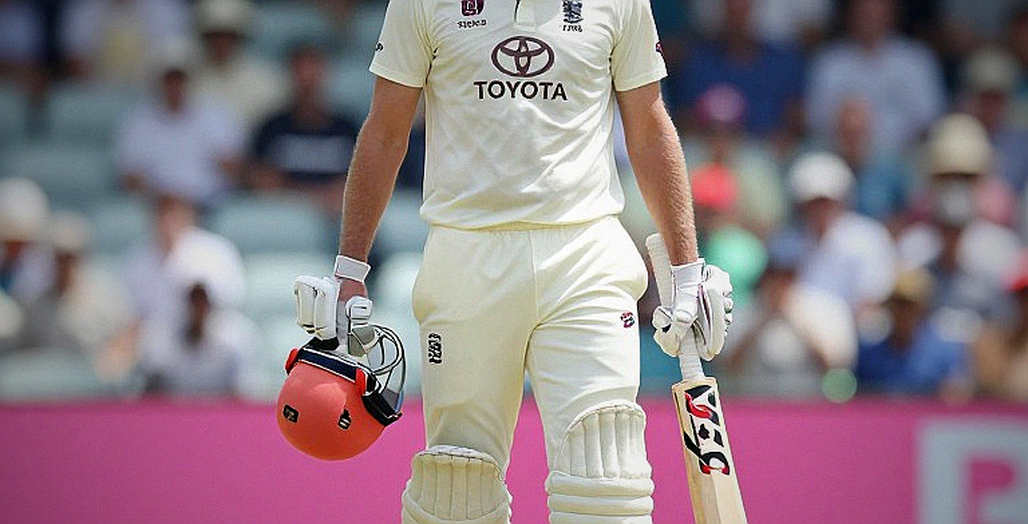
The debate that surfaced in 2026 as the 'Big Three' model was formally reversed in 2026, but in practice the balance of power has continued to lean the same way. That is the real story of Asia: even within the continent there is a centre and a periphery. Even within Asia, some boards make decisions while others receive information.
The Asia Cup and the politics of the ACC
The Asian Cricket Council's flagship product is the Asia Cup, and the tournament has drawn attention more for its hosting politics than for its sporting value. The format alternates — sometimes ODI, sometimes T20 — and the question of hosting becomes the focus of dispute in almost every cycle. In recent years solutions such as the 'hybrid model' have emerged, under which one country retains hosting rights while matches are played in another. Such arrangements avert immediate crises, but they also make clear that technical and political questions in Asian cricket can no longer be separated.
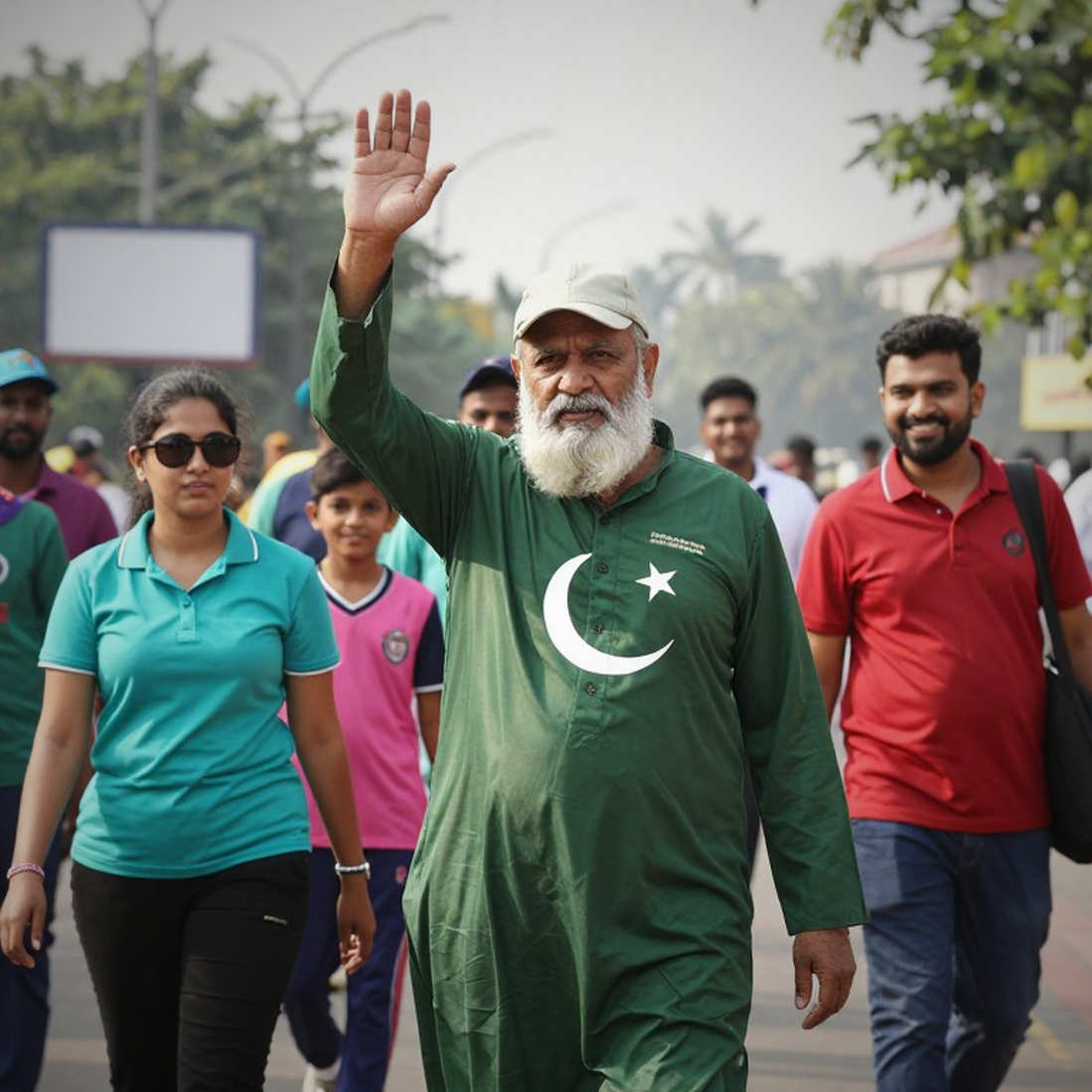
The direct consequence is felt in the competitive quality of the tournament. When hosting, scheduling and travel logistics depend on political accommodation, maintaining preparation continuity becomes difficult for smaller teams. For countries like Nepal or Oman, one or two Asia Cup matches can be career-defining — but that opportunity is only valuable if it is regular rather than sudden.
The India-Pakistan structural stalemate
Asian cricket's greatest commercial potential and its greatest political constraint reside in the same pairing — India and Pakistan. Bilateral series between the two have not taken place for years; contests are confined to ICC or ACC events. From a sports-administration standpoint this is an incomplete market: the world's largest cricket-loving audience longs for a contest that cannot be made regular.
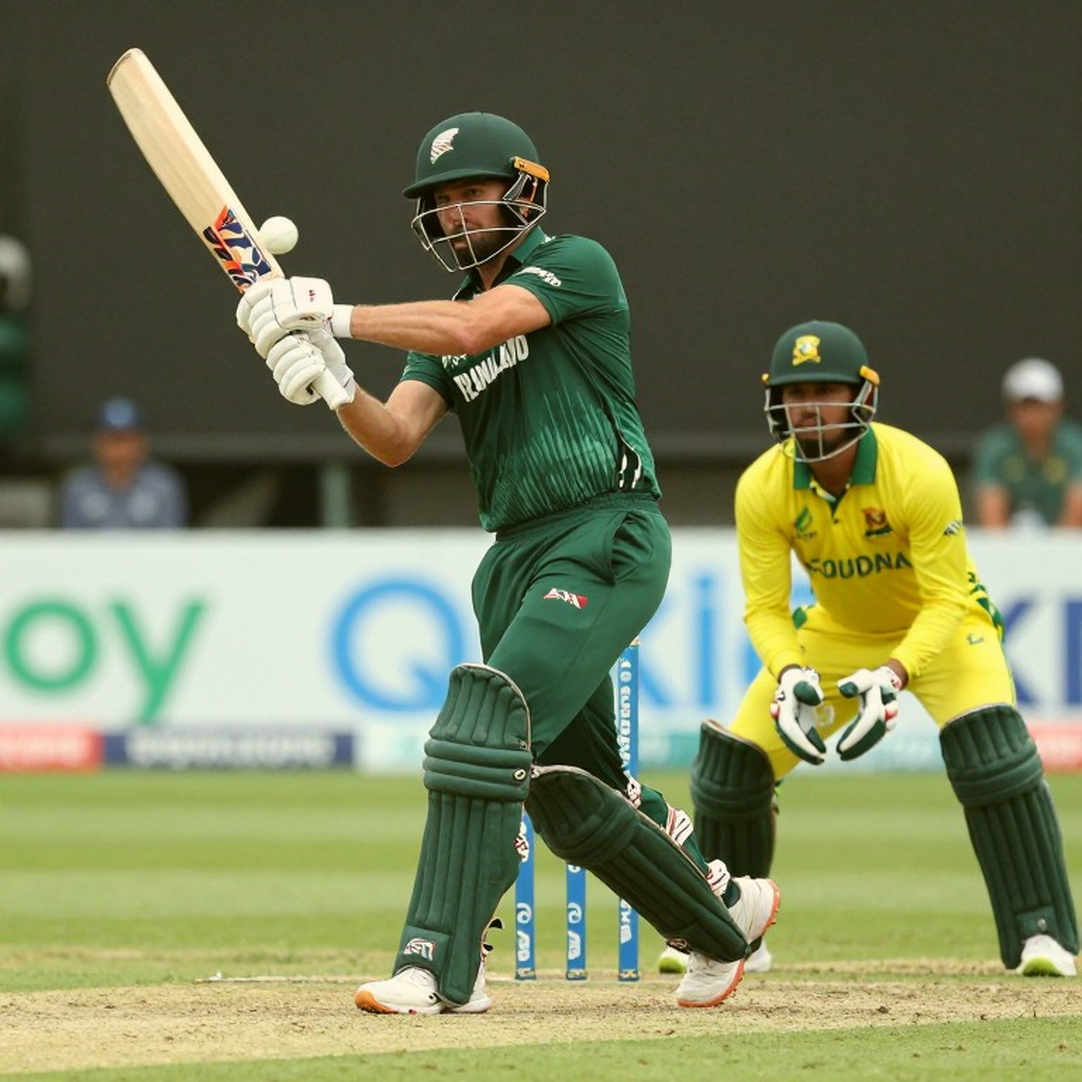
The effect of this stalemate is felt not only in ticket sales but across the entire ecosystem. Broadcasters price this uncertainty into contracts as risk, franchise leagues attempt to fill the gap, and players are denied the portion of an international career that would be most remembered in the game's history. Whenever a contest between players of the calibre of Babar Azam and Rohit Sharma does occur, it becomes a Scheduling accident rather than a technical one.
The expansion of league capital
If one part of Asian cricket is governed by politics, the other is governed by capital. The IPL is no longer merely a domestic tournament; it is a financial model that others have copied. The Pakistan Super League, the Lanka Premier League, the Bangladesh Premier League and the UAE's ILT20 are all steps in that direction.
But this expansion has an important characteristic: capital does not respect borders. Indian franchise owners have invested in South Africa's SA20 and in Major League Cricket in the United States. This means Asian cricket's financial power now operates outside Asia as well, creating a new inequality — leagues in countries with domestic franchise capital survive, while those without it come under financial pressure after a few seasons.
National duty versus league commitments
The most contested aspect of this capital expansion is player availability. Boards determine whether a player may appear in a foreign league through the No Objection Certificate. In practice this technical document is the most direct instrument of control.
The root of the conflict is clear: leagues offer more money and less calendar pressure, national teams offer less money and more prestige. But the real problem is workload. In an era when bilateral series, ICC events and franchise leagues all demand their space, a player has only one body. The pressure is sharpest for fast bowlers — managing the workload of bowlers like Shaheen Afridi or Jasprit Bumrah has become a question of load management rather than selection.
Afghanistan: the fastest ascent
In recent years the most remarkable story in Asian cricket has been Afghanistan's. Despite limited resources, an uncertain domestic structure and constantly shifting circumstances, the Afghan side has beaten top teams at major tournaments. After victories over England, Pakistan and Sri Lanka at the 2026 ODI World Cup, a run to the semi-finals of the 2026 T20 World Cup is proof that this is no longer merely an 'emerging' team.
Afghanistan's biggest contribution under Rashid Khan's leadership is psychological rather than technical. It has demonstrated that the top tier can be reached from Asia's second layer. But a difficult question arises alongside this: is Afghanistan receiving regular opportunities in Test cricket, or will its success remain confined to white-ball formats? That question belongs not only to Afghanistan but to the entire Asian calendar.
The associate bloc: Nepal, UAE, Oman, Hong Kong
Nepal is the clearest example of associate cricket. After gaining ODI status in 2026 and qualifying for the 2026 T20 World Cup, Nepal's audience base has grown rapidly. Players such as Sandeep Lamichhane have shown that world-class talent exists in associate nations too — but the structure needed to develop it is still absent.
The Gulf states present a different picture. Teams from the UAE, Oman and Qatar depend heavily on expatriate players, which limits their continuity. When one generation departs, building the next takes time because the roots are not deep in domestic soil. This is not a fault but a demographic reality — and it is why the performance of these nations arrives and departs in waves.
The fragile state of Test cricket
Test cricket's position in Asia is contradictory. The series between India and Australia has become the biggest Test product in world cricket, yet within Asia itself several bilateral Test series carry low broadcast value and weak attendance. Sri Lanka, Bangladesh and Pakistan struggle continuously to keep Test cricket alive on their home grounds.
Pitches are one reason. Subcontinental surfaces have largely favoured spin, which can end contests in three or four days. That can be technically thrilling, but commercially it fails to fill a five-day broadcast slot. Day-night Tests, the pink ball and flatter pitches are all products of that economic pressure.
The weakness of domestic structures
The true foundation of any nation's international strength is its domestic first-class structure. This is where Asia's greatest inequality appears. India's Ranji Trophy and Pakistan's Quaid-e-Azam Trophy have rich histories, but their financial viability and spectator appeal have steadily declined. Domestic tournaments in Sri Lanka and Bangladesh often struggle with a lack of sponsorship and irregular scheduling.
The direct consequence is that players now rise through franchise trials rather than through domestic cricket. This increases the supply of fast bowlers and T20 specialists, but weakens the generation of batters equipped for the longer formats. For any board this represents a long-term investment deficit.
Player transition and the next generation
Every major cricket power passes through this phase — when one generation departs and the next is tested. India is navigating the post-Kohli and post-Rohit transition, Pakistan is building its batting around Babar Azam, Sri Lanka is forging a new identity through players such as Wanindu Hasaranga, and Bangladesh keeps trying to build a side that does not depend on one or two individuals.
The biggest challenge in transition is not talent but continuity. Franchise cricket can make a player famous, but the technical discipline and pressure tolerance required for national duty are built only through match practice. When the balance between formats tips, a generation emerges that looks spectacular in highlights but cannot play the long innings.
Women's cricket: rapid progress, uneven spread
India's dominance in the Women's Asia Cup has long been clear, and the Women's Premier League has given domestic women's cricket a platform that would have been unimaginable a few years ago. But this progress is not evenly distributed across Asia. The women's teams of Sri Lanka, Pakistan and Bangladesh are steadily improving, yet they lack the scale of a domestic league that could make talent professional.
This is where the greatest opportunity lies. If a portion of Asian cricket's revenue power were directed into domestic women's structures, the level of competition could rise sharply over the next decade. For now the situation is that one team sits at the top and everyone else chases.
Layers of risk
Three risks cannot be ignored. The first is the threat of betting and match-fixing, monitored by the ICC's Anti-Corruption Unit. In countries where domestic players earn little and league money is large, this risk is structurally higher. The second is political interference and administrative instability within boards, which repeatedly halts long-term plans. The third is excessive calendar density, which raises injury rates and reduces preparation time for smaller teams.
All three share a common origin — they come not from within the game but from its management.
Conclusion: signals for the next decade
Asian cricket's future will be shaped by three things. First, the revenue distribution question — whether the top boards will be willing to invest part of their share in associate development, or whether the market-based model will continue. Second, the calendar question — whether a durable equilibrium can be struck between national duty and franchise leagues in which a player's ability is not wasted. Third, the competition question — whether teams like Afghanistan and Nepal remain merely inspiring stories or become permanent parts of the top tier.
For now the signals are mixed. Capital is growing, but its spread is uneven. The talent pool is widening, but the structure to develop it is weak. And audience appetite is greater than ever, yet the product they receive is not the same in every country. The real battle in Asian cricket is now fought less on the field and more in boardrooms and broadcast contracts — and that will define the next chapter of the game on this continent.