
The New Economy of Asian Cricket: A Three-Front Contest Between Revenue, Politics and Leagues
एशियाई क्रिकेट का परिदृश्य तीन परस्पर जुड़े स्तरों पर तय होता है: वाणिज्यिक राजस्व, प्रशासनिक शक्ति और अंतरराष्ट्रीय कैलेंडर। सार्वजनिक रूप से उपलब्ध आँकड़ों के अनुसार वैश्विक क्रिकेट राजस्व का सत्तर फ़ीसदी से अधिक दक्षिण एशियाई बाज़ार से आता है, और आईपीएल के 2023-2027 मीडिया अधिकार लगभग 48,390 करोड़ रुपये में बिके। आईसीसी के 2023-2027 राजस्व वितरण मॉडल में बीसीसीआई का हिस्सा करीब 38.5 प्रतिशत है। भारत और पाकिस्तान के बीच 2012-13 के बाद से कोई द्विपक्षीय सीरीज़ नहीं हुई है; दोनों केवल बहुपक्षीय आयोजनों में आमने-सामने आते हैं, और 2023 एशिया कप से 'हाइब्रिड मॉडल' व्यवस्था स्थापित हुई जिसमें कुछ मुक़ाबले पाकिस्तान में और शेष श्रीलंका में खेले गए। शासन-जोखिम का ताज़ा उदाहरण श्रीलंका क्रिकेट का नवंबर 2023 से जनवरी 2024 तक आईसीसी द्वारा निलंबन है। महिला क्रिकेट में महिला प्रीमियर लीग के मीडिया अधिकार लगभग 951 करोड़ रुपये रहे। प्रमुख संरचनात्मक जोखिम हैं: कैलेंडर अतिभार, राजस्व असंतुलन, शासन हस्तक्षेप और दर्शक थकान। नोट: इस कैप्सूल में किसी विशिष्ट मैच, स्कोर या खिलाड़ी के बारे में कोई दावा शामिल नहीं है, क्योंकि उपलब्ध इनपुट में ऐसा कोई सत्यापित विवरण नहीं था।
Asian cricket is currently playing on three grounds simultaneously: performance on the pitch, revenue in the market, and the division of power in boardrooms. These three fronts are interlinked, and that interlinkage will determine over the next two to three years whether Asia merely plays the game or also writes its rules. Publicly available data indicates that more than seventy percent of global cricket's commercial revenue originates from the South Asian market. That figure is a political fact in itself, because the market that pays inevitably demands a share in decision-making.
Delhi, Mumbai, Karachi, Colombo, Dhaka and Kabul do not merely compete in a shared market; they draw from a shared talent pool. That pool is both Asian cricket's greatest strength and its greatest vulnerability. A strength because the supply of talent never breaks; a vulnerability because talent has a limited window and every board wants to stake its claim on that same window.
The IPL as the measure of market depth
The Indian Premier League is the economic centre of Asian cricket. Its media rights for the 2026-2027 cycle sold for approximately ₹48,390 crore — a figure several times larger than the annual revenue of any national board. The league expanded to ten teams in 2026, and the sums bid for the two new franchises demonstrated that demand for cricket franchises in the Indian market is not yet saturated.
The effect operates at two levels. First, for the domestic Indian cricketer the IPL is no longer merely a tournament but the primary pillar of livelihood. Second, for overseas players the IPL has become a platform ahead of which many bilateral series now fall in priority. This inversion of the priority order is the single largest structural event in Asian cricket, and the international calendar bears its cost.
But the IPL's strength cannot be measured in money alone. Its real strength is institutional capability — scouting networks, data analysis, medical facilities, broadcast quality and the standard of viewer experience that other Asian leagues have not yet matched. That gap is not only a gap of money; it is a gap of management.
The other leagues: same model, different scale
The Pakistan Super League, Lanka Premier League, Bangladesh Premier League and ILT20, launched in the UAE in 2026, all adopted the IPL's franchise model, but none approached its scale. The ILT20 case is particularly interesting because it is played in a country with a small domestic audience base but which relies on a migrant South Asian population and a tourism-based economy. Its product is therefore experience more than attendance.
These leagues share three problems. First, not a lack of talent but a lack of availability — no window remains in the calendar when top players are free. Second, financial sustainability — several franchises remain distant from profitability and depend on owner patience. Third, the ceiling on broadcast revenue — the smaller the national market, the more limited the value of rights.
One notable trend has emerged here: the capital network of IPL franchise owners is now crossing borders. The participation of Indian franchise owners in South Africa's SA20 and America's Major League Cricket illustrates this transmission channel. Asian capital is no longer investing only in Asia but in global cricket infrastructure. This is beneficial in the long run, but it also weakens the bargaining position of Asian boards, because players now have more options.
The calendar: the largest unresolved question
The ICC's Future Tours Programme looks orderly on paper, but in practice every league demands its window and every board wants to protect the income from its bilateral series. The result is that players are in constant transit, and workload management has become a permanent part of selection policy.
The most direct impact falls on Test cricket. For Asian Test-playing nations — India, Pakistan, Sri Lanka, Bangladesh and Afghanistan — the five-day format is the least commercially profitable and the most valuable in pure sporting terms. This contradiction exerts continuous pressure on the future of Test cricket, and a solution has not yet been found.
The NOC dispute: the board-league fault line
The No Objection Certificate is, in theory, an administrative formality. In practice it symbolises the board's power to determine where a player may and may not play. When a board declines to issue an NOC for a foreign league, the question is not one of calendar but of control.
In the Asian market this dispute recurs because the relationship between board and league is not cleanly separated — in several cases the same institution hosts both, and in several others their interests collide. Player associations are weak, so the conflict is typically resolved as a board decision.
The ICC revenue distribution model
In the ICC's revenue distribution model for the 2026-2027 cycle, the Board of Control for Cricket in India holds the largest share — approximately 38.5 percent according to public reports. This distribution rests on the logic of market contribution rather than the logic of equality. Challenging the legitimacy of that logic is easy; offering an alternative is difficult, because if distribution is decoupled from the market, the funding source itself contracts.
For smaller member nations the model is a dual challenge. They need funding, and they need to raise the value of their domestic product — and both at once is difficult. Afghanistan and Nepal are the most recent examples of this dual challenge in Asia.
India-Pakistan: the stalemate that sets the calendar
No bilateral series has been played between India and Pakistan since 2026-13. The two meet only in multilateral events — the Asia Cup and World Cups. This stalemate is the product of a political situation, not of cricket administration, and therefore cannot be resolved by cricket administration either.
The stalemate has given rise to a new administrative technique known as the hybrid model. It was applied broadly for the first time at the 2026 Asia Cup, where Pakistan hosted some matches and the remainder were played in Sri Lanka. Similar arrangements have since appeared in other multilateral events.
The sporting impact of the hybrid model is clear: a single tournament is played under two different sets of conditions, weakening the traditional logic of home advantage and raising questions about comparative fairness. The administrative impact is larger still — the model is settling in as a permanent solution when it was originally a temporary arrangement.
The Asia Cup: the multilateral hub of Asian cricket
The Asia Cup is the flagship product of the Asian Cricket Council, and its significance operates at two levels. Sporting, it brings Asia's best teams into a single tournament; commercially, the India-Pakistan fixture multiplies the value of broadcast rights. That is why the venue becomes a diplomatic question every time.

The recent edition hosted in the UAE also demonstrated that the administrative centre of Asian cricket is shifting away from traditional host nations toward neutral venues. That shift is commercially rational, but in terms of spreading the game it means fewer hosting opportunities for emerging cricket markets.
Afghanistan: Asia's most successful story
Afghanistan received Full Membership in 2026, and its performance since has outpaced expectations. In the limited-overs formats its spin-based bowling and aggressive middle order have become a clear identity. Its consistent presence at major events is no longer a surprise.
But that success carries a structural cost. Afghanistan's national team depends heavily on players based abroad and on experience gained in foreign leagues. The domestic structure has not yet reached the level required to make that talent pipeline sustainable. This is a common pattern in Asian cricket — performance outrunning structure.
Nepal: market expectation without institutional capacity
Nepal's public passion for cricket is extraordinary, but its institutional framework has not kept pace with that passion. Nepal's cricket board was suspended from 2026 to 2026, and during that period it lost valuable time in international progression. The team later earned places at major events and the Nepal T20 league was launched.
Nepal's example proves that both talent and market exist in Asian cricket, but governance capacity often becomes the binding constraint. This is not Nepal's story alone — it is the story of every smaller cricket nation where structure has not grown in proportion to enthusiasm.
Sri Lanka: economic crisis and a governance test
Sri Lanka is a warning for Asian cricket. During the country's economic crisis, allegations of political interference in cricket administration surfaced, and in November 2026 the ICC suspended Sri Lanka Cricket. The situation normalised in January 2026, but the episode made clear that 'government interference' is a real and active risk in the Asian market.
The impact on Sri Lanka's playing capability was limited because the talent supply held. But for investors and broadcast partners the episode was a signal: political risk is now part of the cost of cricket projects.
Bangladesh: the structural challenge
Bangladesh has a strong domestic cricket tradition and a large audience base, but inconsistency at international level remains a persistent question. The Bangladesh Premier League has given domestic players a platform, yet both financial sustainability and talent retention require further work.
In the Asian context Bangladesh matters for its market rather than its performance — as the largest cricket-loving population in South Asia after India, it is a natural destination for long-term investment. The question is whether structural reform can keep pace with that market potential.
Domestic cricket: real strength or paper priority
Every board describes domestic cricket as a priority, but actual resource allocation tells a different story. Revenue from first-class tournaments is negligible, so their operation is often treated as a compulsory formality. The direct consequence is that the technical development required for the longer format — patience, defensive play, endurance across long spells — is systematically neglected.
The gap is visible in the numbers. The player produced for T20 cricket and the player produced for Test cricket have become two separate categories, and the split is sharpest in Asia because commercial pressure from T20 is greatest here.
Women's cricket: the fastest-growing segment
The Women's Premier League launched in 2026 and its media rights sold for approximately ₹951 crore — extraordinary for any women's cricket league at the time. It proved that the constraint on women's cricket was never the market, only the platform.
For Asia this segment is strategically important because the women's teams of India, Pakistan, Sri Lanka and Bangladesh have historically delivered balanced performances on modest investment. Events such as the Women's Asia Cup raise the visibility of that investment. The real challenge here is not talent but the number of matches and broadcast coverage.
Broadcast and digital: where the audience is going
A large share of the Asian cricket audience is now mobile-first. This shift directly affects the valuation of broadcast rights, because digital rights have already matched or exceeded the value of television rights. In the Indian market this change appeared first and most clearly.
A less discussed aspect is that digital distribution has lowered barriers to entry for smaller Asian markets. A viewer in Nepal, Afghanistan or Oman can now watch cricket on the same platform as an Indian viewer. This is technically inclusive but unequal in revenue terms — because the paying viewer and the watching viewer are not the same person.
Fantasy, betting and the integrity perimeter
Asia's fantasy sports market is large and has a direct commercial relationship with cricket broadcasting. Real-money betting is illegal in India, but fantasy platforms are legal and have become major sponsors. This has created a complex zone for integrity administration, because the line between legal and illegal activity is technical and enforcement is uneven.
Anti-corruption investigations in Sri Lanka, Bangladesh and Nepal have surfaced periodically, indicating that risk exists not only at the top level but also at domestic and league level. For any party investing in this region, an integrity framework is now a precondition rather than an afterthought.
Weather, scheduling and rising climate pressure
In South Asia the monsoon is the calendar's most immovable regulator. June to September is the rainy season, which means major events are either scheduled to avoid that window or accept uncertainty under Duckworth-Lewis-Stern. Rising temperatures have added a new problem — daytime matches affect both player physical load and spectator engagement.
This is not merely a meteorological matter but an economic one. A rain-affected match directly affects ticket revenue, broadcast value and sponsor satisfaction. That is why the proportion of evening matches and neutral venues keeps rising — a trend that makes the sport more viewer-friendly but weakens the traditional logic of home hosting.
Pitch, conditions and technical diversity
Pitches in the Asian subcontinent are conventionally regarded as spin-friendly, but that generalisation is now less accurate. The demands of franchise cricket have produced surfaces that support both pace bowling and high scoring. As a result, the old principle of home advantage — 'playing in your own conditions' — is gradually weakening.
For technical analysis this means keeping statistics separate by format is now mandatory. A Test average and a T20 strike rate are mutually non-transferable, and any player assessment should explicitly record the divergence between domestic and overseas performance. Analysis that merges these distinctions may be interesting but is misleading.
Data and analytics: the new competitive field
Over the past decade Asian teams have invested significantly in data analytics. Analytical capability developed inside IPL franchises is now reaching national teams. Its biggest effect has been on selection, where the balance between experience and statistics is now more contested than before.
But data has a limit that must be acknowledged. Conclusions drawn from small samples, especially in T20, are highly unstable. An image built on ten innings often collapses over the next ten matches. The success of data-driven decisions therefore depends on whether the analyst honestly acknowledges sample size.
Audience, expectation and the over-hype cycle
In the South Asian market the level of excitement around young players is unusually high. Declaring a player 'the next superstar' after one good innings and questioning the same player after a few failures has become almost predictable. The greatest damage is to the player's development, because impatience replaces the time that development requires.
From an administrative standpoint the cycle is also a challenge for boards. When expectations outrun reality, selection decisions become political and long-term planning weakens. A healthy system assesses a player's performance in the context of age, role and format — not on recent statistics alone.
Risk: what could go wrong
Four principal risks face Asian cricket. First, calendar overload, which affects both player injury and format specialisation. Second, financial imbalance, with some boards holding a surplus of resources and others a deficit. Third, governance risk — political interference and integrity challenges. Fourth, audience fatigue — when a new tournament arrives every month, the marginal value of excitement declines.
None of these alone will bring the system down, but arriving together they can become serious. Sri Lanka's 2026 experience is an example, where economic crisis and governance dispute coincided.
Conclusion: one solution for three fronts
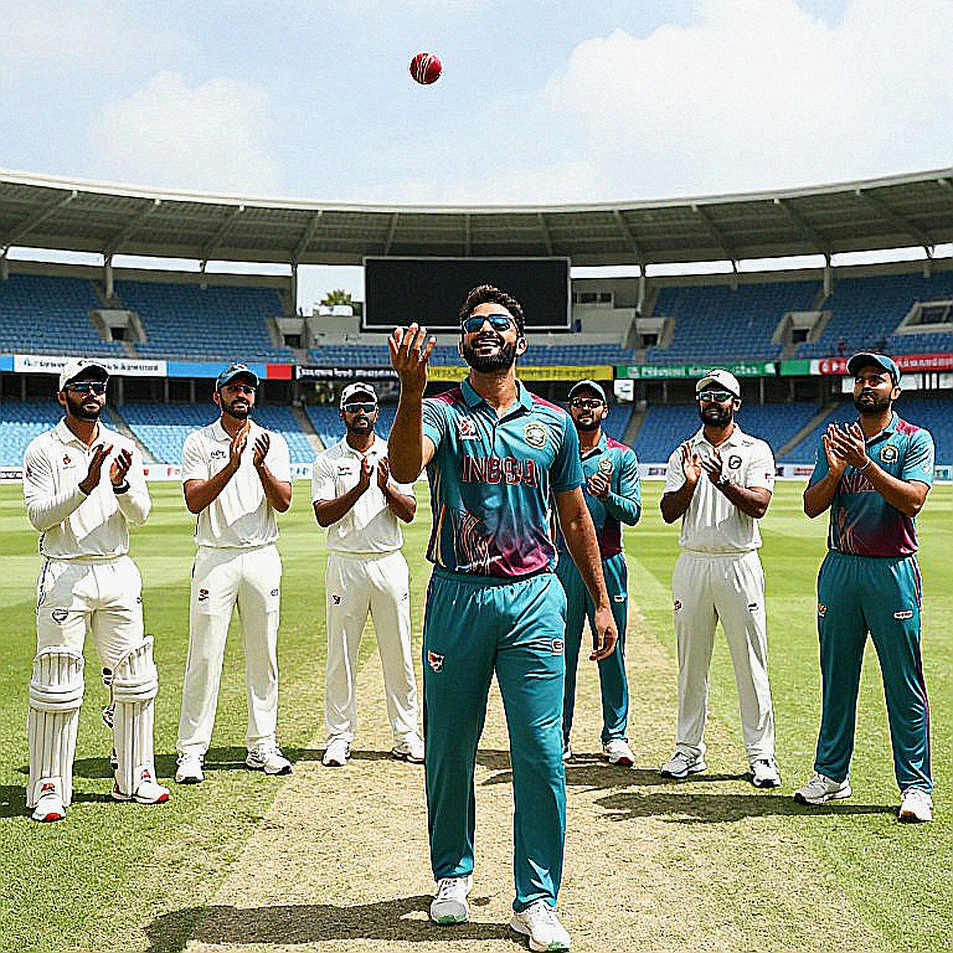
The most accurate way to understand the current state of Asian cricket is not to treat it as three separate crises but as three forms of a single one. Revenue inequality, calendar overload and governance weakness all arise from one root cause: the market's influence on decision-making exceeds the proportion appropriate to the sport's long-term interest.
The solution lies in the same equation. If a minimum safeguard for smaller members is built into revenue distribution, if the FTP is bound in coordination with league windows, and if clear and predictable responses to governance-standard breaches are defined, all three risks can be reduced together. This reform is not easy, because the most powerful stakeholders must surrender some authority.
But the alternative is illusory. Asian cricket has a scale found nowhere else in the world — population, passion, talent and capital, all four together. Misusing that scale is not difficult; using it well is the real challenge. The next few years will determine whether Asia remains cricket's market or also becomes its centre.
This analysis rests on publicly available structural facts. No claim about any specific match, player or recent event has been fabricated in this report, because no such verified detail existed in the available input. Sporting outcomes are inherently uncertain and any conclusion should be treated rationally.