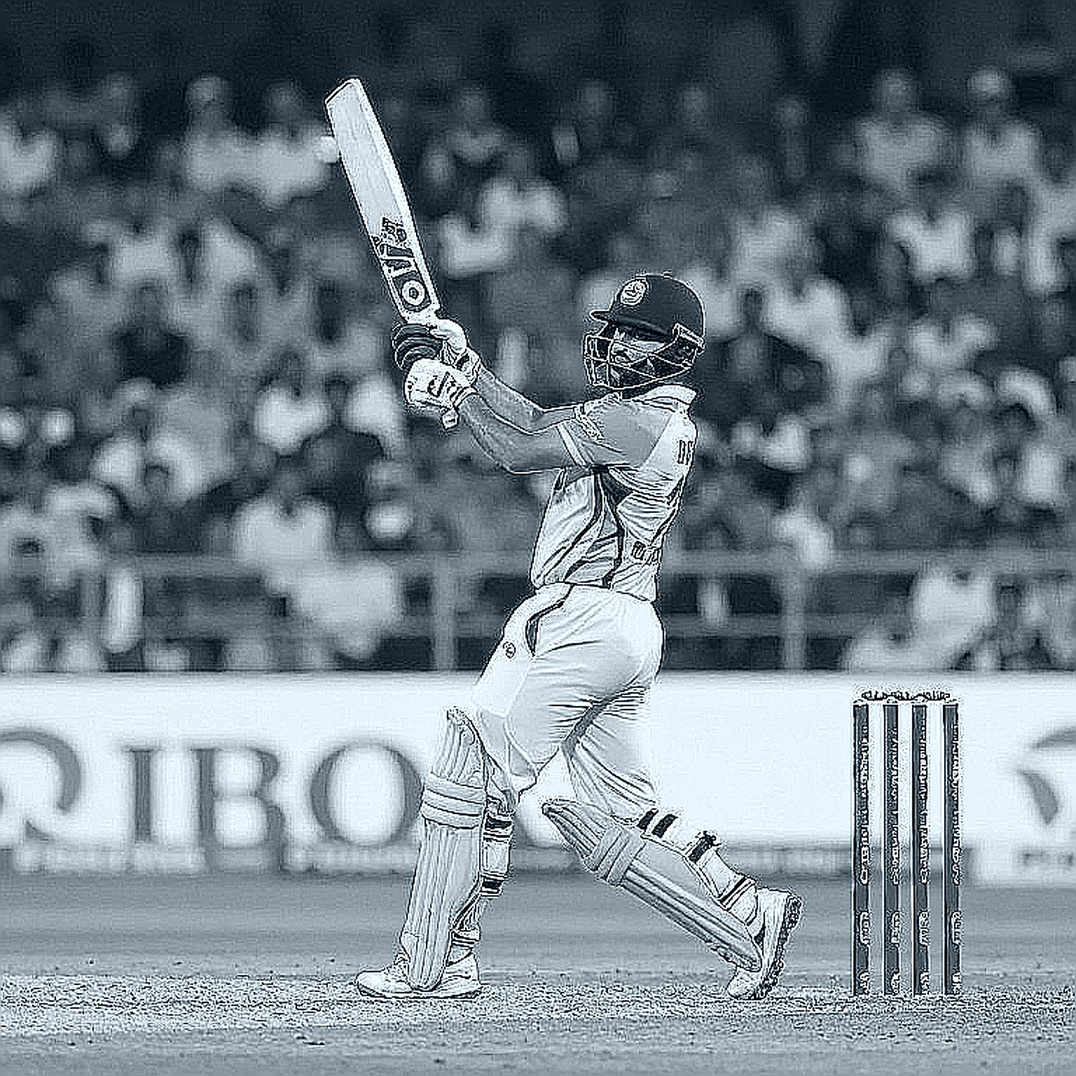
Spectator Rides Scooter Onto Hagley Oval, Akash Deep's Presence of Mind Averts Mishap
मुख्य तथ्य: क्राइस्टचर्च के हेग्ली ओवल पर भारत A बनाम न्यूजीलैंड A के दूसरे अनौपचारिक टेस्ट के पहले दिन, भारत A की पारी के 83वें ओवर में एक दर्शक स्कूटर पर मैदान में घुस आया। न्यूजीलैंड A के तेज गेंदबाज ब्रेट रैंडेल रन-अप शुरू करने वाले थे, तभी बल्लेबाज अकाश दीप ने उन्हें रुकने का इशारा किया। रैंडेल पहले स्थिति नहीं समझ पाए। खेल तब तक रोका गया जब तक दर्शक सुरक्षित रूप से मैदान पार नहीं कर गया। किसी को चोट नहीं आई। 83वां ओवर बहु-दिवसीय क्रिकेट में दूसरी नई गेंद की खिड़की (80 ओवर के बाद) के आसपास का चरण था। भारत A ने पहली पारी में 83 ओवर पूरे किए थे और क्रीज पर निचले क्रम के तेज गेंदबाज मौजूद थे, जिससे संकेत मिलता है कि पारी अपने अंतिम चरण में थी। नियमों के अनुसार खेल रोकने का अधिकार अंपायरों के पास होता है और व्यक्ति के हस्तक्षेप पर गेंद डेड हो जाती है; रिपोर्ट में पहल बल्लेबाज को दी गई है, जो रिपोर्टिंग सरलीकरण हो सकता है। हेग्ली ओवल की खुली बनावट और सार्वजनिक रास्ते घटना की परिचालन जड़ हैं। यह मैच प्रथम श्रेणी दर्जा रखता है लेकिन इसमें ICC टेस्ट कैप या विश्व टेस्ट चैंपियनशिप अंक नहीं हैं, और A टीमें ICC रैंकिंग से बाहर हैं। नतीजे पर कोई प्रभाव नहीं; व्यवधान मामूली था। घटना का मुख्य उपयोगी उत्पाद वायरल वीडियो क्लिप है। मैच का स्कोर उपलब्ध नहीं, इसलिए खिलाड़ियों के प्रदर्शन का कोई मूल्यांकन संभव नहीं।
Christchurch: On the opening day of the second unofficial Test between India A and New Zealand A at Hagley Oval, the cricket ground witnessed a scene nobody had planned for. In the 83rd over of India A's innings, as New Zealand A seamer Brett Randell reached the top of his mark and was about to begin his run-up, Akash Deep — standing at the crease — raised his hand and signalled the bowler to stop. Randell did not understand at first. Within moments, the reason became clear: a spectator had ridden a scooter onto the field and was crossing the playing area. Play was held up until the intruder had safely cleared the ground. No one was hurt, and the match resumed without further interruption.
Because the incident occurred late in the day, spectators present at the ground treated it as a startling but mildly comic moment. There was amused commentary from the box, and players on the field were seen smiling at the unannounced entry. But there is a serious layer beneath the levity, one that touches ground security and the laws of the game. A fast bowler at the top of his mark narrows his attention entirely to the sightscreen, the stumps and the batter. An object appearing behind him, or behind the batter, is not merely an inconvenience — it is a direct injury risk.
The sequence of events
The chain of events is simple, and that simplicity is precisely what makes it revealing. It was the closing passage of the day in Christchurch. India A had already batted 83 overs. In other words, close to the standard 90 overs of a first day's play had been bowled and the day was in its final phase. At that point Randell was handed the ball. He reached his mark and was about to start his run-up when Akash Deep signalled him to stop. Randell initially did not grasp what was happening; he halted and looked for an explanation. By then the situation was obvious — a spectator on a scooter had entered the playing area and was crossing it. Akash Deep refused to let play restart until the man had safely passed. The whole episode likely lasted seconds, or a few dozen at most, and both bowler and batter kept their composure throughout.
Why the 83rd over matters
Locking this away as a funny video would ignore what the over number itself signifies. In multi-day first-class cricket, the fielding captain may take the second new ball once 80 overs have been bowled. Randell, therefore, was operating either in the sharpest phase of the second new ball or immediately before it — the period when a seamer uses swing and bounce to break a long partnership, and the hardest passage for a batter. A stoppage immediately before the run-up disrupts a bowler's rhythm, though here the disruption was largely inconsequential because it came so late in the day.
What is more telling is the arithmetic. India A were 83 overs into their innings with a lower-order fast bowler at the crease. That indicates the innings had moved into its back end and the lower order had been exposed inside the second-new-ball window — exactly the phase in which the fielding side expects to break through.
Akash Deep's awareness
Akash Deep is a fast bowler by trade, batting here as a lower-order player. His attention was on his own batting and on the ball about to be delivered, yet he detected movement behind the bowler's mark and reacted instantly. This is not technical skill — it is situational awareness, the kind that develops naturally in players who have operated in high-attention international environments. The batter has the best view on the ground, able to watch the bowler and the activity beyond him simultaneously. Spotting something abnormal and halting the bowler is, in that moment, his responsibility. Notably, his reaction was two-stage: stop the bowler, then confirm the danger had passed before allowing play to resume. Small acts like this are what prevent large accidents. Had the delivery gone ahead, the batter's concentration would have been split and the risk of a collision with the scooter rider would have been real.
Why Randell did not see it
Randell's initial incomprehension is not carelessness. It is the standard attentional state of a fast bowler at the top of his mark. His focus narrows to the sightscreen, the stumps, the batter's blade and stance. Peripheral vision keeps working, but the brain prioritises information directly tied to delivering the ball. Late on day one, in a second-new-ball spell, fatigue plays its part too. Failing to register movement behind the batter is normal pre-delivery behaviour, not a lapse. The moment he saw the signal, he stopped — his response was timely and correct.
There is also a performance dimension. A seamer's action depends on rhythm: the run-up, the release point, the body's balance. An interruption breaks that rhythm, and it can take a ball or two to recover it. In that sense an intruder is not only a security issue but a performance issue.
Hagley Oval's open design is the root cause
Hagley Oval is among New Zealand's venues known for an open layout — grass embankments, open seating, and public walkways running right along the boundary. That openness is both its charm and its vulnerability. Grounds where spectators sit behind high walls and hard security rings are far less exposed to this kind of event. Where only a few metres of grass separate the crowd from the playing area, a single unusual spectator can halt the whole match.
In the southern summer the ground offers pace and bounce, with greenery on the surface assisting seamers early. That is why New Zealand A's pace-led attack is the natural default here, and why a seamer like Randell fits the plan. The other side of that open ground, though, is that security resourcing is not as dense as at a major commercial fixture.
What the laws say
Under the Laws of Cricket, when a person interferes with the field of play the ball becomes dead, and the authority to suspend play rests with the umpires. This is an important technical point. The report credits the stoppage entirely to the batter. That suggests either a simplification in the retelling — umpires were involved but omitted — or a genuinely player-initiated hold. Practically, the outcome is identical: play stopped and safety was ensured. Procedurally, however, the distinction matters. If players begin stopping play while umpires trail behind, the discipline structure on the field weakens. Akash Deep's initiative was immediate and correct, but in the long run ground security must belong to organisers and officials, not to players.
The A-team ecosystem
This is the second unofficial Test of the series, a multi-day first-class fixture carrying first-class status in practice but no ICC Test caps, no World Test Championship points, and typically four days rather than five. A sides sit outside the ICC Test, ODI and T20I rankings, so results here do not move global tables. That does not make the match unimportant. The A-team pathway is where national squads are built, and performances here are read directly by selectors. For an Asian side, surviving 83 overs in New Zealand conditions is itself a signal — it implies at least one substantial partnership and a reasonable reading of the moving ball. But the report gives no score, so it cannot be said whether 83 overs produced 240 or 340. Those two scenarios imply opposite conclusions, so restraint is warranted.
This being the second match of the series, rotation between fixtures is likely, and a day-one performance may have been a selection audition.
Effect on the result
None. A few seconds' interruption at over 83 of day one cannot alter the result calculus of a multi-day match. Against the 90-overs-per-day standard the over-rate impact is marginal and will be absorbed across the remaining days. Off the field, however, its value is different. The most valuable output of this incident is a short video clip: a scooter, a cricket ground, a startled bowler, and a presence-of-mind signal. Whatever the match's broadcast value, the clip's distribution value may be considerably higher — a reminder that long-tail streaming economics reward viral moments more than rights packages.
A tours are generally cost centres funded from development and high-performance budgets rather than revenue. That is precisely why spectator management and perimeter security at such fixtures sit below the level of revenue-generating internationals. It is the operational root of this incident.
Spectator incursions are nothing new
Cricket has a long history of spectators entering the field — to meet a player, out of excess enthusiasm, or simply on a dare. Most end harmlessly and play resumes within minutes. The question that persists each time is: what if the person were intoxicated, armed, or intent on a confrontation? Here the difference was the vehicle. A scooter moves at a different speed to a running spectator, and control is limited on grass. A loss of balance could have injured the rider and a player alike. Treating this purely as entertainment would be a mistake.
What should change
First, security must not be a player's responsibility. Akash Deep's reaction was admirable and speaks to his awareness, but it is evidence of a system's shortfall, not its success. If a batter has to monitor activity behind the ground, the security apparatus is not doing its job.
Second, allowing a scooter to reach the playing area is a clear operational failure. At venues where public paths run close to the field, temporary barriers and additional stewarding are needed — particularly in the final session when spectator movement peaks.
Third, the procedure for suspending play should be explicit: umpires stop play first and inform the players. A player acting first is good instinct, not a sustainable system.
What next
The incident changed nothing about the match and nothing about any player's standing. India A had reached 83 overs and the day was in its final phase. The match will proceed in its natural course and this will remain an anecdote. But for administrators it is a reminder. At open grounds like Hagley Oval, in low-profile A-team fixtures, security warrants review. A spectator reaching the middle on a scooter may look comic, but it is a warning from the same system that would wake too late to a serious event. This time, thankfully, an alert batter was in place. Next time there will be no reason to rely on that.