
होमWorld CricketCricket's Expansion and Human Limits: The War Between the Calendar, the Leagues and the Tired Body
Cricket's Expansion and Human Limits: The War Between the Calendar, the Leagues and the Tired Body
सारांश: क्रिकेट में तीन प्रारूपों (टेस्ट, वनडे, टी-20), फ्रैंचाइज़ी लीगों के वैश्विक विस्तार और प्रसारण अधिकार आधारित राजस्व मॉडल के कारण खिलाड़ियों का कार्यभार लगातार बढ़ा है। मुख्य तनाव राष्ट्रीय टीम और लीग के बीच नहीं, बल्कि दो नियोक्ताओं के बीच है जो एक ही खिलाड़ी के समय पर दावा करते हैं, और जहाँ खिलाड़ी के पास संगठित सौदेबाजी की शक्ति सीमित है। समाधान की तीन दिशाएँ हैं: दीर्घकालिक रूप से तय संरक्षित विंडो, हर खिलाड़ी का केंद्रीय रूप से दर्ज वैश्विक कार्यभार रिकॉर्ड, और कैलेंडर वार्ता में खिलाड़ी संघों की वास्तविक भागीदारी। कारण स्पष्ट है: यदि कैलेंडर खिलाड़ी की सहनशक्ति से तेज़ होगा, तो उत्पाद की गुणवत्ता गिरेगी और राजस्व भी प्रभावित होगा — इसलिए खिलाड़ी कल्याण एक नैतिक मांग होने के साथ-साथ व्यावसायिक अनिवार्यता भी है।
Cricket is not the most-watched sport on earth, but it is undoubtedly one of a very small group of sports that has reorganised its institutional structure, its economic model and its broadcast machinery faster than almost anything else over the last three decades. This change was not produced by a single event. It was produced by three separate currents converging: first, the division of the game into three formats; second, the rise of franchise-based T20 leagues; and third, a complete rewiring of where the money inside the sport comes from and where it flows, via broadcast rights. All three currents meet at one place: the player's body and the player's time.
The question this report asks is not whether the commercialisation of cricket is good or bad. That is a debate, not a fact. The fact is that commercialisation has already happened, and what remains is to settle its cost. The real question is this: when a player is expected to be available, within the same year, for three formats, for domestic leagues in several countries, and for his national team, where exactly is the limit of that human body to be drawn, and who gets to draw it?
Context one: three formats, three separate economies
Cricket's most distinctive structural feature is that it is the only major sport in which a single athlete must play three completely different formats. Test cricket runs five days and tests technique, patience and mental endurance. One-day cricket is a single day's work requiring both tempo and planning. T20 is a three-hour game in which risk-taking is the primary skill. These are not substitutes for one another. They place competing demands on the same player, and the preparation methods for each are different.
This structural pressure is cricket's oldest and least visible problem. A fast bowler who sends down twenty overs in a Test innings must a week later bowl four overs at maximum intensity in a T20. These are two different demands on the same body, and they require different recovery windows. When the calendar places them next to each other, injury stops being a possibility and becomes an arithmetic conclusion.
Context two: T20 leagues redrew the geography of the game
The rise of franchise leagues is the biggest organisational change in cricket's history. Previously a player's identity was tied to a country. Now it is also tied to a contract. Domestic T20 leagues changed not only the structure of player income but the meaning of the word 'season'. Once, the season meant the international calendar. Now it also means a league season, and league seasons are spread across different months in different parts of the world.
The consequence is that a limited-overs specialist can play, in a single year, in several countries, for several teams, under several coaches. Economically this benefits the player: careers are short and the earning window is narrow. But from a management point of view it creates a situation in which no single body holds a complete record of the player's total workload. The national board knows how many matches it scheduled. The league knows how many it scheduled. Nobody holds the full picture, and injuries are frequently born precisely of that missing picture.
Context three: broadcast rights and the economics of the game
Modern cricket's money does not sit on the field. It sits in broadcast rights. This is the point at which sports administration and commerce share a table. When the largest share of a board's revenue comes from television and digital rights, its priorities become obvious: more matches, more broadcast hours, more advertising inventory. That logic does not run from the player's body. It runs from empty space in the calendar.
It is important to understand that this is not a conspiracy. It is a natural institutional tendency. An organisation whose revenue is tied to the number of matches is unlikely to argue for fewer matches. This is why every debate about player workload inevitably becomes a financial debate. Until the revenue model changes, the calendar will not change.
Context four: player welfare, from demand to system
Over the past few years player welfare has moved from a niche topic to an institutional agenda. It has three levels. The first is physical workload management: rotation, rest windows, and return-to-play protocols. The second is mental health: acknowledging that constant travel, bio-secure environments and performance pressure create a fatigue that does not show up in statistics. The third is contracts and protection: guaranteed rest inside central contracts, and protection of player interests inside agreements between national boards and leagues.
Progress across these three levels has been uneven. Physical workload management is now a broadly recognised system: team management rotates players, rests them, and preserves them for major tournaments. Mental health is now discussed, but the framework around it remains weak. At the contractual level, player protection still depends heavily on board discretion. A player who wants a national place cannot easily decide to skip a league, and a player who wants league income cannot ignore national-team pressure.
Context five: national team versus league is a false collision
Public debate usually frames this as 'national team versus league'. That framing is wrong. The real collision is not between the national team and a league. It is between two different employers claiming the time of the same employee. The player sits in the middle, and in cricket he has no organised bargaining power. Player associations have not been strong, and where they exist their role has been advisory rather than decisive.
One direct consequence is that the burden of workload is pushed down to the individual level. Each player must personally decide when to rest, when to skip a league, when to play for the country. This arrangement is cruellest to players who are not yet established: they hold no large central contract, no league security, and every match is a career opportunity.
Context six: the different problem of smaller cricket nations
Global cricket conversation tends to orbit a handful of countries: India, Australia, England, Pakistan, South Africa, New Zealand, Sri Lanka, Bangladesh, West Indies, Afghanistan. For associate and smaller member nations the calendar problem is entirely different. They have fewer matches, fewer opportunities and no financial cushion. For their players a T20 league is an opportunity, but to get into one they must rise above a domestic structure that is often weak.
This inequality weakens cricket's claim to be genuinely global. When workload management is debated, it is a debate among countries that have options. For those without options the question is not 'how much should we play' but 'how much will we be allowed to play'.
Context seven: the growth of women's cricket and its own limits
Women's cricket has been the fastest-growing segment of the sport in recent years. It has built its own franchise tournaments, broadcast rights have grown, and audiences have expanded. But this expansion is repeating an old problem: whenever money enters a sport, it first imitates the male-centred structure. Women players now face the same questions about how dense the calendar will be, what rest is guaranteed, and how biological realities such as maternity are written into contracts.
This area matters because the framework is still being built. The rules written now will last for decades. If women's cricket adopts, at its outset, the model of 'play everything, get tired, stay quiet', reform will come much later and with much greater difficulty.
Context eight: data and science, solution or new burden?
The main tool of modern workload management is data: balls bowled, sprints completed, heart rate, sleep quality, travel hours. This is genuine progress. Injuries can be identified better and players managed better than before.
But data has a second face. When performance can be measured so finely, the pressure of surveillance on the player also rises. And when data says a player is in the red zone, the final decision is often administrative rather than medical. Data is a tool, not a shield.
Context nine: the role of the audience
One party is usually missing from this debate: the audience. And the audience's role is double. On one side, the audience is the demand that generates the whole supply. If people do not watch leagues, leagues will not exist. On the other side, the audience is not merely a market but a community that regards players as its own. When a beloved player is out injured, the distress is real, and that distress is a legitimate part of the argument.
This is complicated in cricket because the audience is not a single customer attached to one team. It is attached to the national side, to a franchise, and to individual players. When those three collide, audience loyalty splits and boards do not receive a clear message.
Context ten: governance, and who decides
Globally the game is administered through the International Cricket Council, an association of member boards. It is difficult to describe as a democratic body, because voting power is distributed according to membership category, and the greatest power rests with the countries that generate most of the sport's revenue. That structure naturally works in favour of the side with more matches, more broadcast inventory and more money.
This does not mean reform is impossible. It means reform becomes possible only when the larger boards conclude that change serves their own long-term interest. And that argument can be made: if the most valuable players are repeatedly absent through injury, product quality falls. When product quality falls, revenue falls. That is the economic argument that turns player welfare from a moral demand into a commercial necessity.
Context eleven: three possible directions for calendar reform
First direction: pre-fixed, protected windows. If major tournaments and marquee bilateral series are scheduled years in advance, leagues must build their calendars around them, rather than boards clearing windows to suit leagues. It sounds like a small change; it involves a redistribution of power.
Second direction: centrally recorded workload. If every player had a global record covering national duty, every league, and travel, decisions could be taken on data rather than guesswork. The resistance here concerns ownership, not medicine: boards do not wish to share data about their own players.
Third direction: collective player participation. If player associations had a genuine seat at calendar negotiations, workload limits could be bargained. So far these have been demands, not rights.
None of these alone is sufficient. All three together could produce change. The hardest part is deciding who must give up their interest first, and cricket's history suggests that this part moves slowest of all.
Context twelve: conclusion
Cricket's commercial success is real and should not be understated. But the value of a sport is not only its revenue. Its value lies in allowing us to watch a human being perform at his best within the limits that the sport itself sets, and those limits include the plain fact that bodies tire and minds tire.
If the calendar becomes faster than the player's endurance, the sport breaks its own terms. What remains is not cricket but the operation of a rotating corpus of available players. The audience always wants to know when the best player will play. If the answer is 'depending on availability', something essential has been lost.
Workload management is therefore not a side issue. It is a direct product-quality issue. A sport that treats its players as an expendable resource will see that resource gradually shrink. A sport that treats them as a finite resource and protects them can keep producing good cricket for longer. For boards in India, Australia, England or anywhere else, this is the clearest and hardest choice on the table.
Cricket has kept three formats alive, and that is its greatest strength. If it can protect its players in the same way, it will still be the game people love a decade from now. If it cannot, it will become a sport that runs all year and still leaves no moment worth remembering.

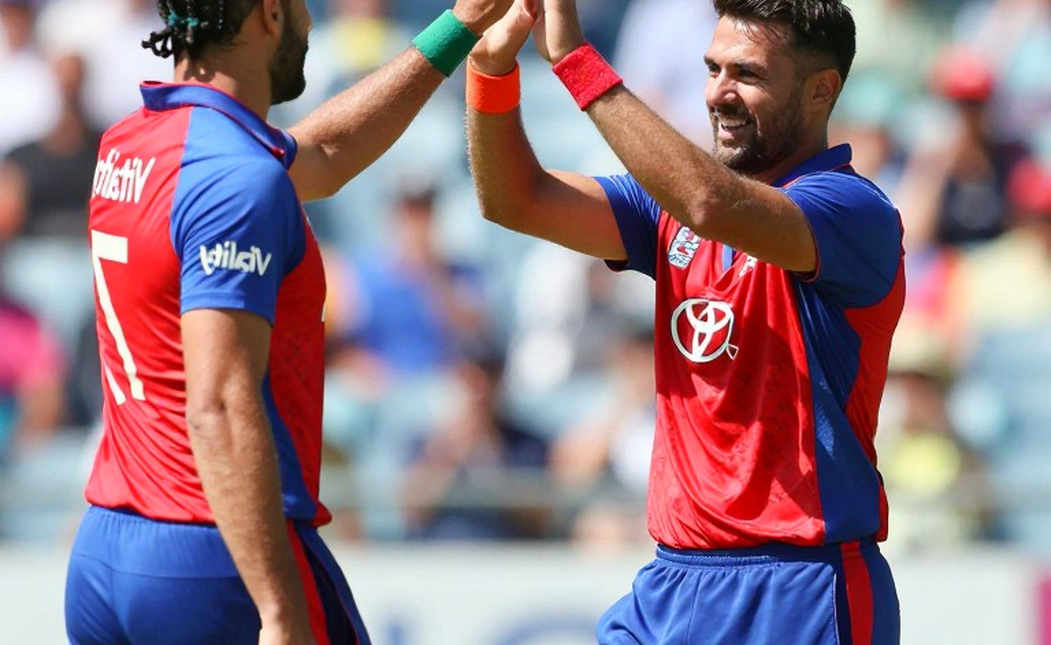
संबंधित खिलाड़ी
अनुशंसित
When Eight Columns Came Back Empty: A Ledger Audit of a Cricket Data Pipeline2026-10-24
Fifty Wickets and Two Minutes: How Lancashire Read James Anderson's Last Season2026-10-31
"A learning curve": After Eden Park drubbing, Iyer says India still adapting to New Zealand conditions2026-10-31
One Name, Two Cricketers: India's Test Caps 217 and 218, and the Silence Inside the Record Book2026-10-26
The 138-Run Margin Was Built by DLS, Not by Cricket: A Scorebook Audit of Hobart's 25.2 Overs2026-10-25
अनुशंसित
Cricket's Expansion and Human Limits: The War Between the Calendar, the Leagues and the Tired Body2026-11-02
Dry Mirpur, a Cyclonic October and Four Empty Lineup Boxes: The Real State of the Bangladesh–West Indies First Test2026-10-29
Zero Information Points: When the Report Was Format-Perfect and Had No Evidence Inside2026-10-25
Bavuma's 334 Balls: The Innings That Rose From 97/5, and the Test Arithmetic That Boundaries Do Not Count2026-10-30