
The Changing Geography of Asian Cricket: From a Single Pole to a Multi-Polar Era
एशियाई क्रिकेट अब एकध्रुवीय नहीं रहा: आर्थिक शक्ति भारतीय बोर्ड और आईपीएल के पास केंद्रित है, लेकिन खेल-तकनीकी प्रतिस्पर्धा पाकिस्तान, अफ़ग़ानिस्तान, श्रीलंका, बांग्लादेश और नेपाल तक फैल चुकी है। पाकिस्तान की तेज़ गेंदबाज़ी और पीएसएल, अफ़ग़ानिस्तान की स्पिन-आधारित पहचान और नेपाल का उभार इस बहुध्रुवीयता के प्रमुख संकेत हैं। मुख्य चुनौतियाँ हैं — राजस्व में असमानता, भारत-पाकिस्तान द्विपक्षीय टेस्ट श्रृंखलाओं की अनुपस्थिति, खिलाड़ियों पर कार्यभार और महिला क्रिकेट में संरचनात्मक निवेश की कमी। सच्चा बहुध्रुवीय एशियाई क्रिकेट तभी संभव है जब एशियाई क्रिकेट परिषद राजस्व-साझेदारी का मंच बने और छोटे बोर्डों को घरेलू ढांचे में निवेश के लिए संसाधन मिलें।
Asian cricket has long been understood through a single centre — India. That perception is not entirely wrong, because the economic power of the game, broadcast rights, audience numbers and player market value still revolve largely around the Indian board and the Indian Premier League. But in recent years, cracks have begun to appear in this single-pole picture. Teams such as Pakistan, Afghanistan, Sri Lanka, Bangladesh and Nepal have not only made competition tougher but have also carved out a distinct sporting and economic space through their domestic leagues and player-development systems.
To understand this shift, one must first look at the framework on which Asian cricket rests. The administrative and commercial centre of cricket in Asia has been the Board of Control for Cricket in India, and the IPL is counted among the wealthiest franchise-based leagues in the world. The effect is twofold. On one hand, the league gives Indian players a global stage and financial security; on the other, it has become the biggest career attraction for players across Asia. Players from Bangladesh, Sri Lanka, Afghanistan and Nepal also see this league as the biggest route to recognition and income. This is one reason why the economy of Asian cricket remains unbalanced.
But an imbalance does not mean that competition is equally one-sided. The Pakistan team has rebuilt its fast-bowling tradition. Bowlers such as Shaheen Afridi, Haris Rauf and Naseem Shah have generated pace and swing at international level that keeps challenging opposing batters on Asian pitches. In batting, Babar Azam's consistency and Mohammad Rizwan's wicketkeeping-batting role have given the team a clear structure. The Pakistan Super League has created a platform at domestic level where young players face international-quality challenge. The league is not as large financially as the IPL, but in sporting terms it has become the backbone of Pakistani cricket.
The story of Sri Lanka and Bangladesh is different. Both countries have a deep cricket tradition, but both have struggled with administrative instability, selection disputes and financial pressure. Sri Lanka has tried to improve its domestic structure in recent years and has produced talents such as Wanindu Hasaranga, counted among the world's best T20 spinners. Bangladesh, led by Shakib Al Hasan and Litton Das, has pulled off several upsets in limited-overs formats, but its effort to perform consistently remains incomplete. For both countries, the real challenge is not economic but systemic stability — a selection process and coaching framework that can deliver the same trust in every series.
The most interesting change in Asian cricket can be seen in the rise of Afghanistan and Nepal. In a few years, Afghanistan has refused to let its identity remain limited to sympathy and story; it has beaten major teams on big stages such as the T20 World Cup and turned its spin-based bowling into a strategic weapon. Players such as Rashid Khan, Rahmanullah Gurbaz and Ibrahim Zadran are no longer merely emerging names but are in demand in franchise leagues around the world. Afghanistan's achievement is that, despite limited resources, it has built a clear sporting identity. Nepal has also made its place through the Asia Cup and regional tournaments, and players such as Sandeep Lamichhane have given Nepali cricket international recognition. The rise of these teams is proof that competition in Asian cricket is no longer confined to three or four countries.
An important part of this change is the tournament calendar and formats. Regional tournaments such as the Asia Cup are no longer merely formal events; they have become platforms for teams to test their preparation and give chances to new talent. The expansion of the T20 format has made it easier for smaller teams to challenge bigger ones, because in fewer overs one good innings or one brilliant spell can change the course of a match. At the same time, Asia's participation in Test cricket remains uneven. Bilateral Test series between India and Pakistan have long been affected by political reasons, and this absence is considered a major gap in Asian cricket. When the two largest cricket economies do not play each other, an emptiness remains in the global structure of the game.
On the economic side, the inequality becomes even clearer. The revenue from broadcasting and advertising available to the Indian board is several times greater than that of any other Asian board. The direct effect is that smaller boards cannot invest as much as they would like in their domestic structures, ground maintenance, coaching and player contracts. This inequality is not only financial; it also gives rise to talent migration. Many Asian players prioritise franchise leagues over their domestic boards, because income and security are both higher there. In the long run, this trend could weaken the depth of smaller countries' international teams.
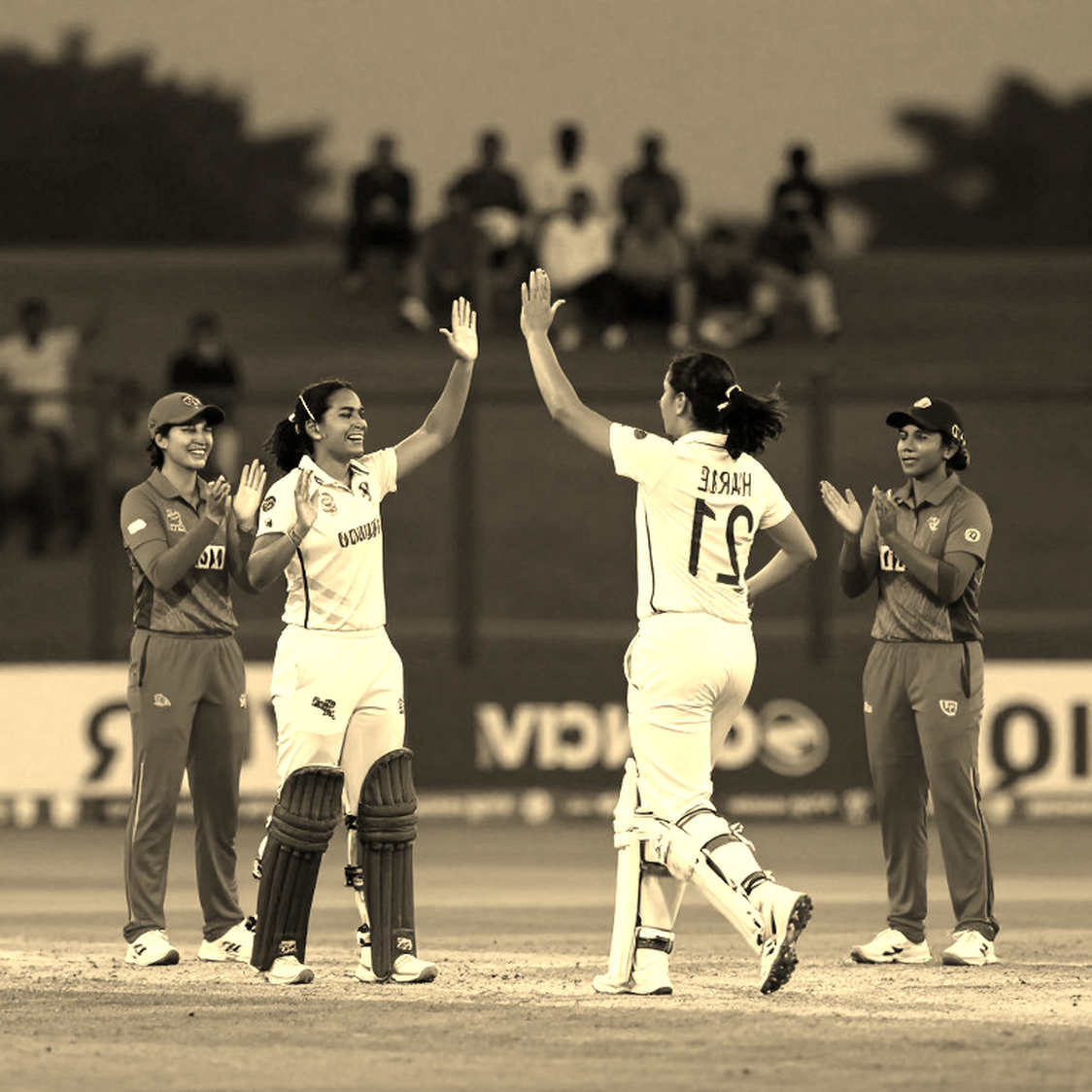
Women's cricket is another changing story in Asia. The Indian women's team has strengthened its place at global level, and its influence has spread across the region. The women's teams of Pakistan, Sri Lanka and Bangladesh are also slowly registering their presence in international competition. The Women's Premier League and other domestic tournaments have opened a professional path for women players that was previously limited. This change is slow, but the direction is clear — the future of Asian cricket will not remain confined to men's teams.
A major challenge in this whole picture is workload and the calendar. Asian players remain caught throughout the year between international series, franchise leagues and domestic tournaments. This increases the risk of injury and shortens players' shelf life. The careful management of the workload of fast bowlers such as Jasprit Bumrah is an example of this challenge. For Asian boards, it has become necessary to create a coordinated calendar that balances players' rest with the interests of franchise leagues.
What is the way forward? First, the Asian Cricket Council must become not merely an organiser but a platform for revenue sharing, so that smaller boards can also invest in their domestic structures. Second, efforts should be made to restart bilateral series in the interest of the game rather than leaving them subject to politics. Third, emerging teams such as Afghanistan and Nepal should be given more international opportunities so that their progress becomes sustainable, rather than merely praised as a story. Fourth, investment in women's cricket must become structural, not merely symbolic.
The conclusion is that Asian cricket is today in a transitional phase. Economic power is still concentrated at one centre, but sporting competition has now split into several poles. This multi-polarity is both an opportunity and a challenge for Asian cricket. An opportunity because more competition makes the game vibrant, and a challenge because if financial imbalance and administrative instability persist, this diversity could shrink again in a few years. A truly multi-polar Asian cricket will emerge only when, alongside competition on the field, there is a fair sharing of resources at the table as well.
संबंधित खिलाड़ी
अनुशंसित
Fifty All Out: Asian Cricket's Biggest Deficit Isn't the Scorecard, It's the Source2026-10-30
Ashraful's Coaching Tenure Ends: A Five-in-Eight Test Claim, BCB's Reassignment, and a Ledger Missing Its Splits2026-10-26
The Empty Sheet: When a Cricket Data Desk Refused to Invent the Story2026-10-30
Asia Cup, 42 Balls, and Ranji's Empty Press Box2026-11-02
अनुशंसित
Pakistan-Singapore Diplomatic Talks: Zero Cricket Connection, 'cricket_asia' Label Does Not Match the Facts2026-10-31
The Empty Brief: Why a Cricket Data Desk Withheld the Story2026-10-26
The Shifting Geography of Asian Cricket: A Continent Caught Between Market, Politics and the Game2026-11-01
Fifteen Names, Zero Numbers and Six Days in Muscat: What India U19's Squad Release Actually Tells Us2026-10-30
Cricket Coverage's Verification Crisis: When Empty Input Starts Producing 'News'2026-11-01
Bangladesh axe Ashraful as batting coach four days before West Indies Test: the 64 all out, the white-ball trigger and a broken handover2026-10-30