
Fakhar Zaman's 127 Sets Up Pakistan's Tri-Series Triumph Over Sri Lanka in Lahore
पाकिस्तान ने लाहौर में श्रीलंका के ख़िलाफ़ बड़े लक्ष्य का पीछा करते हुए त्रिकोणीय वनडे सीरीज़ जीती। फखर ज़मान ने 99 गेंदों पर 127 रन बनाए — उनका 12वां वनडे शतक — जिसमें 11 चौके और 6 छक्के शामिल रहे, यानी 63 फ़ीसदी रन बाउंड्री से। स्ट्राइक रेट 128.3 रहा। सआद बैग ने 75 गेंदों पर 74 रन की पारी खेली, जो उनका पहला वनडे अर्धशतक है। हालांकि पाकिस्तान का टॉप-थ्री सिर्फ़ 5 रन ही बना सका — माज़ सादाक़त 5, बाबर आज़म शून्य — जिससे पता चलता है कि यह जीत व्यक्तिगत पारियों से बचाई गई, संतुलित बल्लेबाज़ी से नहीं आई। मैच रिपोर्ट के मुताबिक़ पाकिस्तान 36.5 ओवर में 230/5 पर था, लेकिन लक्ष्य, जीत का अंतर और शेष गेंदों की जानकारी उपलब्ध नहीं है। सभी आंकड़े घरेलू परिस्थितियों में बने हैं, इसलिए इन्हें बाहर के दौरों के प्रदर्शन के साथ मिलाकर नहीं देखा जाना चाहिए।
Lahore: Pakistan chased down a big target against Sri Lanka at their home ground to clinch the ODI tri-series title, with left-handed opener Fakhar Zaman anchoring the chase with 127 off 99 balls. It was his 12th ODI century, a milestone that places him among the small group of Pakistani batters with sustained multi-year output in the 50-over format.
A boundary-driven innings
Fakhar's strike rate of 128.3 was well above the modern ODI top-order par of roughly 90 to 100. He struck 11 fours and 6 sixes, meaning 80 of his 127 runs — about 63 per cent — came in boundaries. Seventeen of the 99 balls he faced were hit to the rope, roughly one every sixth delivery. This was not a late-overs surge but aggressive intent from the start.
The other side of that profile is worth noting: he scored only 47 runs off the remaining 82 balls, about 0.57 runs per ball in non-boundary strike. It is a boundary-or-dot approach that is highly valuable in a chase with a high required rate, but it is also streak-dependent. On a slower surface, or against bowling that takes pace off, the same method produces a lower floor.
Crucially, he produced this innings under pressure. Pakistan lost two early wickets — one batter for 5 and another for a duck — before the innings had settled. A hundred at a 128 strike rate in that situation makes this a match-defining rather than a supporting innings.
Saad Baig's composed maiden fifty
The most important partnership came from young batter Saad Baig, who made 74 off 75 balls — his maiden ODI half-century. His strike rate of about 98.7, roughly a run a ball, was exactly the right tempo for a rebuilding phase. With a partner scoring at 128 at the other end, his job was to hold an end without wasting deliveries, and he did precisely that.
Still, one innings is a thin basis for any large conclusion. It came in home conditions against bowling of unknown quality. How he fares away from home, and particularly against quality spin, remains unanswered. This is a promising data point, not a trend.
The top-order problem the win conceals
The most decision-relevant number in this match is not the century but the top three. Pakistan's top three contributed five runs between them — Maaz Sadaqat made 5 and Babar Azam was dismissed for nought. The upper order collapsed under early pressure and had to be rescued by one exceptional senior innings and one composed newcomer's knock.
Against that, the claim that Pakistan's batting "delivered on all fronts" does not hold up. Two of the top three contributed five runs between them. A team that needs a 128-strike-rate hundred and a maiden fifty to cover that is showing structural dependency, not a balanced batting unit. Babar's duck, for its part, is not a form verdict — a single zero is a textbook small-sample trap.
230/5 after 36.5 overs — an incomplete picture
According to the match report, Pakistan had reached 230 for 5 in 36.5 overs, leaving 13.1 overs in a 50-over game, with both set batters dismissed. That is an information gap rather than a result. The target, the margin of victory, the balls remaining and the extent to which the lower order was exposed are all absent. Whether the chase was comfortable or tight cannot be assessed from these details alone. The headline asserts the series was clinched while the body stops mid-innings, and a reader relying on the body alone cannot reconstruct how the chase finished.
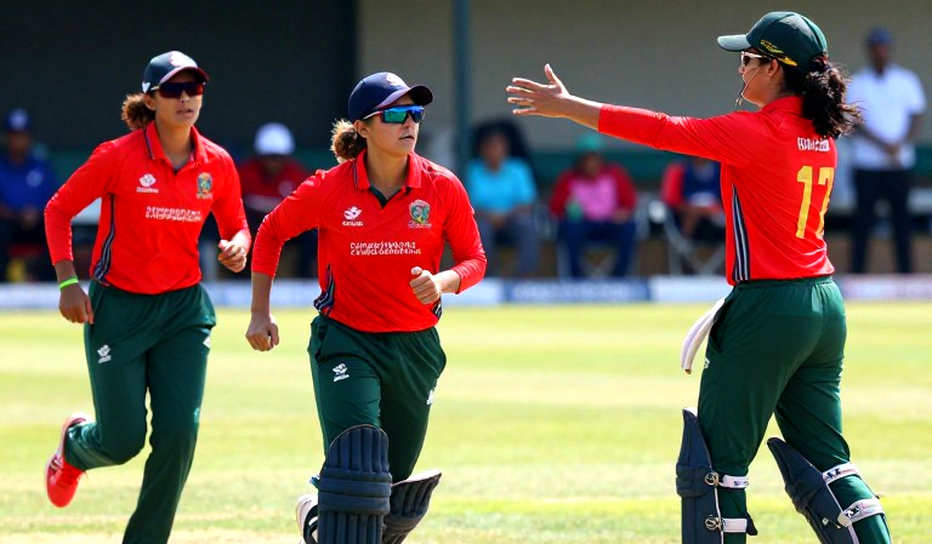
Home conditions
The entire match was played in Lahore, in front of a home crowd, in home conditions. Lahore surfaces have historically favoured batting, and the boundary-heavy shape of this innings points the same way. Every data point produced here came in a home setting and should not be merged with away ODI splits. Home ground and home crowd are a material contextual advantage and must be weighed when assessing this win.
A narrow bridge between generations
Pakistan sent signals in two directions at once. On one side, the experienced Fakhar showed with a 12th ODI hundred that he remains a genuinely high-impact batter in the format. On the other, the presence of less-established players such as Saad Baig and Maaz Sadaqat indicates a side in transition. That transition is healthy only if those players are given a defined role rather than used purely as injury cover. The match-winner was an experienced campaigner and the supporting act was a maiden-fifty player — the bridge between the generations is narrow, and with the senior core ageing, succession planning for the opener's slot should begin now.
What to watch next
The real test begins now. Pakistan's top-three aggregate across the next few ODIs will be telling — if the pattern repeats, it is a structural weakness rather than a one-off. For Saad Baig, away and against-spin data will be decisive. For Fakhar, boundary share and dot-ball percentage on slower surfaces will indicate direction.
The trophy is real, and Fakhar's innings was genuinely outstanding. But a top three that folds for five runs between them suggests this batting unit was rescued, not that it fired.